
Hydraulic elevators are built to move heavy loads with smooth, reliable force. That same system depends on hydraulic oil, seals, cylinder packings, valves, reservoirs, and pit components working together every day. When oil begins bypassing the jack cylinder packing or wiper ring, that fluid can collect in the elevator pit and create a messy maintenance problem for building engineers, elevator contractors, and property managers.
At CED Elevator & Electrical, we look at elevator pit maintenance as more than housekeeping. A clean, dry, controlled pit supports code compliance, reduces callback risk, protects equipment, and helps prevent hydraulic oil from becoming an environmental issue.
That is where a heavy duty elevator scavenger pump becomes a practical solution.
What Is an Elevator Scavenger Pump?
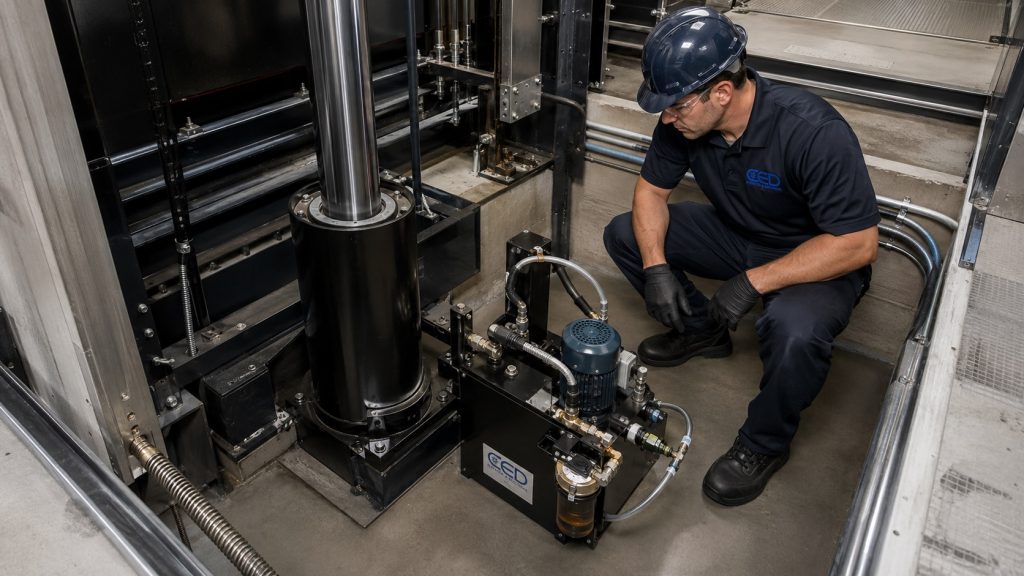
An elevator scavenger pump is designed to capture leaked hydraulic oil that collects around the cylinder head, packing, wiper ring, or pit area. In many hydraulic elevator systems, a small amount of oil can escape past the packing as the piston moves. Training material for hydraulic elevators explains that a scavenger captures oil that slips from the packing and wiper ring, and some motorized scavengers return the escaped oil to the main hydraulic reservoir.
Instead of letting that oil sit in the pit, spread across the floor, mix with water, or require repeated manual cleanup, an oil recovery system keeps the fluid controlled.
A properly selected elevator oil recovery system can help:
- Capture bypass oil before it spreads
- Return recoverable oil to the reservoir
- Reduce slippery pit conditions
- Support cleaner elevator pit maintenance
- Limit oil exposure to drains, soil, and building materials
- Reduce repeated nuisance service calls
- Improve visual inspection conditions for mechanics
For facilities with hydraulic elevators, this is not just a convenience item. It is a preventative maintenance tool.
Why Hydraulic Elevator Cylinder Leaks Happen
A hydraulic elevator cylinder leak can start small. Over time, heat, pressure, seal wear, contamination, age, piston condition, and misalignment can all contribute to oil escaping around the packing.
Common causes include:
- Worn cylinder head packings
- Damaged or hardened seals
- Contaminated hydraulic oil
- Scored or worn piston surfaces
- Heat-related seal breakdown
- Improper packing installation
- Aging equipment
- Excessive system pressure
- Poor oil condition
- Heavy building traffic
A scavenger pump does not replace the need to repair failed packings. It helps manage the oil that escapes while the elevator system is monitored, serviced, or maintained. The best long-term approach combines the right seals, proper hydraulic system troubleshooting, and a dependable scavenger pump setup.
The Pit Problem: When Small Leaks Become Compliance Risk
Hydraulic oil in the pit can create several problems at once.
A small leak may look manageable during a routine visit, but repeated bypass can build up fast. Once oil mixes with water, dirt, pit debris, or sump discharge, the cleanup becomes more complicated. If oil leaves the controlled elevator pit environment and reaches soil, drains, groundwater pathways, or adjoining areas, the issue can shift from maintenance to environmental exposure.
EPA oil spill rules require reporting when certain oil discharges reach navigable waters or adjoining shorelines, and SPCC reporting thresholds are based on the amount of oil that actually reaches those areas. EPA lists reportable SPCC discharges as more than 1,000 U.S. gallons in a single discharge, or more than 42 U.S. gallons in each of two discharges within a twelve-month period.
Most elevator pit oil issues are much smaller than those thresholds, but the takeaway for property managers is clear: oil should stay contained, recoverable, and documented. Clean pits reduce risk.
How an Automatic Scavenger Pump Works
A heavy-duty scavenger pump uses a pump assembly, reservoir basin, float switch system, tubing, and access cover to manage oil and water accumulation in elevator pit applications.
CED’s Heavy Duty Scavenger Pump is designed for elevator pit use and includes a 1/3 HP motor, 101 GPH pump capacity, 100 ft of plastic tubing, a 5-gallon bin, a clear acrylic top, and dual float activation. CED lists the pump as ASME A17.1 safety-code compliant.
In practical terms, the system helps by:
- Collecting fluid that accumulates in the pit or recovery basin.
- Activating automatically when the float reaches the set level.
- Moving oil or fluid through tubing.
- Supporting cleaner pit conditions.
- Giving mechanics easier access for inspection and maintenance.
The clear top and removable access design matter because elevator pit maintenance should not require guesswork. Teams need to see fluid level, inspect the system, and clean filters before small problems become major callbacks.
Elevator Scavenger Pump Troubleshooting: Warning Signs to Watch
An elevator scavenger pump is only useful when it is working properly. Building engineers and elevator contractors should add the pump to the preventative maintenance checklist.
Watch for these warning signs:
| Warning Sign | What It May Mean | Action Step |
|---|---|---|
| Pit oil keeps rising | Pump not activating, tubing blocked, or leak rate increasing | Inspect float, tubing, power, and leak source |
| Pump runs but fluid remains | Clogged intake, blocked line, or failing pump | Clean filter, inspect tubing, verify discharge |
| Pump short cycles | Float issue, debris interference, or low basin volume | Inspect float movement and basin condition |
| Dirty or cloudy recovered oil | Water contamination or pit debris | Check pit water sources and oil condition |
| Strong oil smell | Active leak, poor ventilation, or stagnant fluid | Escalate inspection and clean pit promptly |
| Pump does not start | Power, float, motor, or switch issue | Test safely through qualified elevator personnel |
| Repeated filter clogging | Excess debris, deteriorated packing, or dirty pit conditions | Clean pit and inspect source of contamination |
Scavenger pump troubleshooting should focus on both the pump and the elevator system. If the pump is constantly recovering fluid, the issue may be a failing cylinder packing, not a pump problem.
Filter Maintenance: The Small Task That Prevents Big Problems
Filters and intake screens protect the pump from debris, sludge, lint, dirt, and broken-down seal material. When those filters clog, the pump may lose flow, run longer, overheat, or fail to recover fluid before oil spreads across the pit.
A practical filter maintenance routine should include:
- Visual inspection during routine elevator service
- Cleaning or replacing filters based on site conditions
- Checking float movement
- Confirming tubing is not kinked or blocked
- Inspecting the basin for sludge buildup
- Checking recovered fluid for water contamination
- Logging fluid volume and frequency
- Escalating unusual oil recovery levels
The goal is not only to keep the pump alive. It is to spot leak trends early. If a pump that once collected a small amount of oil now fills frequently, the hydraulic system may need deeper service.
Why Oil Recovery Supports Preventative Maintenance
A dry pit tells a better story during inspection. Mechanics can see the cylinder, packing head, buffers, pit equipment, wiring, and floor conditions more clearly. Oil-covered floors hide issues and make service work harder.
A clean oil recovery system supports:
- Better pit visibility
- Safer access for mechanics
- Cleaner equipment condition
- Faster troubleshooting
- Less manual cleanup
- Better maintenance documentation
- Better tenant and owner confidence
For property managers, the value is simple: a dry pit makes the elevator system easier to maintain and easier to defend during compliance reviews.
When a Scavenger Pump Points to a Bigger Hydraulic Problem
An elevator oil recovery system should not become a substitute for repair. If the pump is constantly active, the building may be dealing with a worsening hydraulic elevator cylinder leak.
Escalate the issue when:
- Oil recovery volume increases suddenly
- The same pit needs frequent cleanup
- Oil appears around the packing head
- Recovered oil looks contaminated
- The elevator develops leveling issues
- The power unit shows heat or vibration
- The tank oil level drops faster than expected
- Seals or packings are aging
- The elevator has repeated callbacks
CED’s hydraulic power unit troubleshooting guide explains that contaminated oil, low oil level, heat, pump noise, vibration, slow travel, and valve behavior can point to broader hydraulic system trouble.
The scavenger pump helps control the mess. The maintenance team still needs to solve the source.
Pairing Scavenger Pumps With Power Unit Planning
CED lists scavenger pumps as optional features on hydraulic power units, alongside options such as tank heaters, pressure gauges, low oil switches, low pressure switches, oil coolers, shut-off valves, pipe rupture valves, isolation couplings, motor starters, and fittings.
For modernization projects, this matters. A building that has had pit oil problems for years may benefit from more than a one-part replacement. The right plan may include:
- New cylinder head packing
- Scavenger pump installation or replacement
- Oil condition review
- Low oil switch
- Improved pit cleanup protocol
- Updated hydraulic fittings
- Reservoir and line inspection
- Power unit modernization
CED’s Modernization resources cover hydraulic fittings, hoistway and traveling cable, wire rope, controllers, door operators, fixtures, and other modernization materials.
Best Practices for Elevator Pit Maintenance
A good elevator pit maintenance plan keeps oil, water, and debris from becoming a liability.
Use this checklist:
- Keep the pit dry and visible.
- Document oil accumulation.
- Separate hydraulic oil issues from groundwater or sump water issues.
- Inspect the scavenger pump float and tubing.
- Clean filters before restriction affects flow.
- Track how often the pump activates.
- Inspect cylinder packing and wiper rings when oil returns increase.
- Keep recovered oil handling consistent with site procedures.
- Review local elevator code and environmental requirements.
- Use qualified elevator personnel for pit access and hydraulic system service.
Never ignore oil in the pit because it looks routine. Small leaks can indicate seal wear, oil contamination, temperature stress, or cylinder issues that deserve attention.
What Property Managers Should Ask Their Elevator Contractor
When pit oil appears, property managers and building engineers can ask better questions:
- Is the oil coming from cylinder packing bypass?
- How much oil is being recovered each month?
- Is the scavenger pump working automatically?
- Are the filters clean?
- Is the recovered oil contaminated with water?
- Is the pump returning oil to the reservoir properly?
- Does the hydraulic oil level show a trend?
- Are the packings due for replacement?
- Is the pit dry enough for safe inspection?
- Are there any environmental reporting or cleanup concerns?
These questions turn a messy pit complaint into a controlled maintenance plan.
The Cleaner Pit Standard: Dry, Documented, and Defensible
Hydraulic oil leaks are not rare, but unmanaged oil in an elevator pit should never become normal. A scavenger pump gives building teams a practical way to recover leaked oil, reduce slippery conditions, keep pits cleaner, and support a stronger compliance posture.
At CED Elevator & Electrical, our role is to help contractors, mechanics, modernization teams, and building professionals source the elevator parts and pit accessories needed to keep systems running cleanly and reliably.
FAQs
What does an elevator scavenger pump do?
An elevator scavenger pump captures hydraulic oil that escapes around the cylinder packing or wiper ring and helps move recovered oil back toward the hydraulic reservoir or a controlled collection point. This keeps the elevator pit cleaner and easier to maintain.
What causes a hydraulic elevator cylinder leak?
Common causes include worn packings, aging seals, contaminated hydraulic oil, piston wear, heat, pressure issues, poor alignment, or heavy elevator traffic. A scavenger pump manages leaked oil, but the source still needs professional inspection.
How often should scavenger pump filters be maintained?
Filter maintenance depends on leak volume, pit cleanliness, oil condition, and site traffic. Building teams should inspect filters during routine elevator service and clean or replace them before flow becomes restricted.
Why is elevator pit maintenance important for environmental compliance?
Oil in an elevator pit can become a compliance concern if it spreads beyond the controlled area, mixes with water, or reaches drains, soil, or adjoining areas. A dry, documented pit supports cleaner maintenance and lower environmental risk.
Does CED supply elevator oil recovery systems?
Yes. CED Elevator & Electrical supplies a Heavy Duty Scavenger Pump for elevator pit applications, along with hydraulic power unit components, repair parts, Texacone packings, and modernization materials.
Where does CED Elevator & Electrical serve customers?
CED serves elevator contractors and building professionals through regional locations including Long Beach, CA, Columbia, MD, South Windsor, CT, Arlington, TX, and Chicago, IL.