
Hydraulic elevator repair often starts with a visible symptom: oil in the pit, rough leveling, vibration, foaming oil, slow up travel, or an elevator cylinder leak. The root cause can be harder to see. A small packing defect, a worn seal lip, a scratched plunger, or an undersized replacement part can quietly destabilize the hydraulic system before a major callback ever happens.
At CED Elevator & Electrical, we support elevator contractors, service mechanics, modernization teams, OEMs, and building professionals with quality elevator parts, replacement components, and technical support. CED Elevator & Electrical has stocked elevator products and elevator parts for more than 25 years, with products ranging from consumables to modernization packages.
When hydraulic systems start leaking, aerating, overheating, or cavitating, the right replacement part matters. That is why our focus stays on proven products, including Texacone packings and seals, heavy-duty scavenger pump replacement options, and hydraulic power unit components built for demanding field conditions.
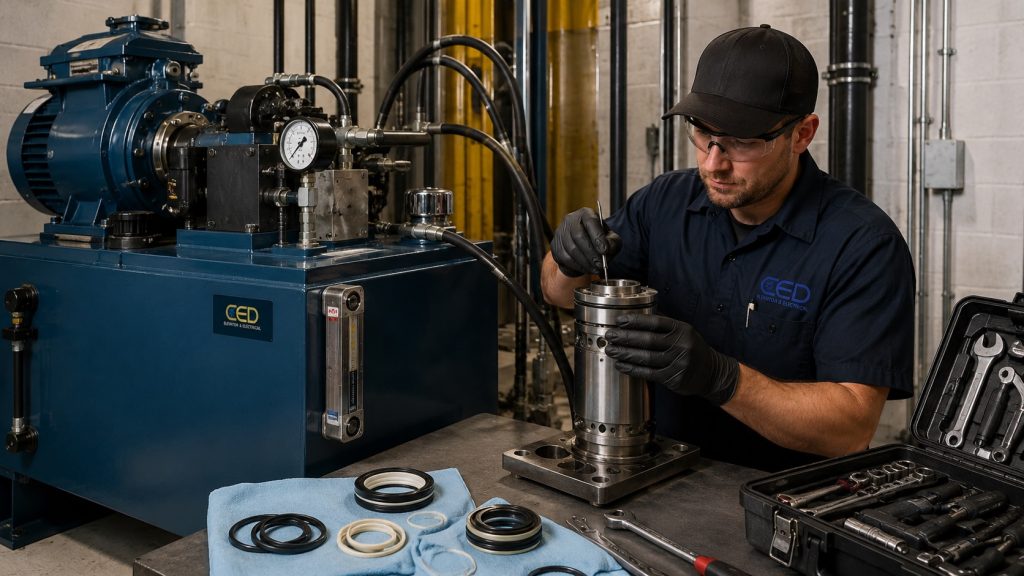
How Do Packings and Seals Help Prevent Cavitation?
Precision packings and seals help prevent hydraulic system cavitation by maintaining oil pressure, reducing fluid leakage, limiting air intrusion, and keeping the cylinder head sealed as the piston moves. When cheap or worn seals develop micro-tears, oil can bypass the seal area, air can enter the fluid path, and system pressure can become unstable. That pressure instability can contribute to foaming, vibration, pump noise, poor ride quality, and cavitation-related damage.
In a hydraulic elevator, the packing set is not just a leak stopper. It is part of the pressure-control system.
What Cavitation Means in a Hydraulic Elevator
Cavitation happens when pressure drops enough for vapor bubbles or air pockets to form in hydraulic fluid. When those bubbles collapse, they can create vibration, noise, heat, pitting, and component wear.
In elevator field terms, cavitation often shows up as:
- Rough starts
- Pump noise
- Vibration through piping or tank walls
- Foamy or aerated oil
- Unstable leveling
- Longer run times
- Heat buildup
- Recurring hydraulic elevator repair calls
- Premature pump, valve, or seal wear
Why the Cylinder Head Is a Critical Sealing Point
The cylinder head is where the moving piston passes through the sealed hydraulic system. This is where packings, seals, wipers, O-rings, wear rings, and related components work together to control oil, pressure, contamination, and movement.
A proper packing set helps:
- Keep hydraulic oil inside the cylinder
- Limit leakage at the piston
- Maintain system pressure
- Protect against dirt and water intrusion
- Reduce excess friction
- Support smoother piston travel
- Protect the pump and valve from unstable operating conditions
- Reduce oil accumulation in the elevator pit
Texacone’s hydraulic sealing documentation explains that its cup packings use a tapered lip that contacts the cylinder wall and provides an automatic tight seal.
How Micro-Tears Become Major System Problems
A small seal defect may not look serious at first. A hairline tear, hardened edge, nicked packing lip, or damaged wiper can still allow the elevator to run. The problem is what happens over time.
A micro-tear can allow:
- Oil bypass
- Pressure loss
- Air intrusion
- Fluid turbulence
- Oil foaming
- Heat increase
- Contamination entry
- Cylinder leak progression
- Pit oil accumulation
- More frequent maintenance callbacks
Once air becomes mixed into hydraulic oil, the system no longer behaves predictably. The pump may sound louder. The valve may respond unevenly. The car may start, stop, or level less smoothly. The mechanic may fix one symptom only to find another symptom returns because the root sealing issue was not addressed.
That is why choosing the correct Texacone packings and seals matters during hydraulic elevator repair.
Cheap Seals Can Raise Contract Risk
A low-cost packing set may look attractive during a repair quote, but poor sealing performance can create expensive repeat problems.
For elevator contractors and maintenance providers, those repeat problems can affect:
- Callback rates
- Client trust
- Preventive maintenance schedules
- Oil usage
- Pit cleanup
- Inspection readiness
- Component life
- Contract profitability
- Service reputation
A failed seal can also create environmental concerns when hydraulic oil collects in the pit or around the cylinder head. CED’s heavy-duty elevator scavenger pump page describes the pump as a solution for managing water and oil accumulation in elevator pit applications.
A cheaper part is not cheaper when it creates a second truck roll.
Why Texacone Packings and Seals Matter
Texacone is an industry-recognized source for elevator seals, packings, tools, and accessories. Texacone describes its product line as supporting elevator seal and packing needs to help keep elevators running.
At CED Elevator & Electrical, we carry over 400 different Texacone products, including cylinder head packing sets, traction machine packing, and seals. Orders usually ship same day, helping mechanics get the right part faster.
That selection matters because hydraulic elevator cylinders are not all the same. The correct packing set depends on:
- Cylinder manufacturer
- Plunger diameter
- Head style
- Seal configuration
- Wiper type
- O-ring requirements
- Wear ring needs
- System condition
- Repair history
- Field measurements
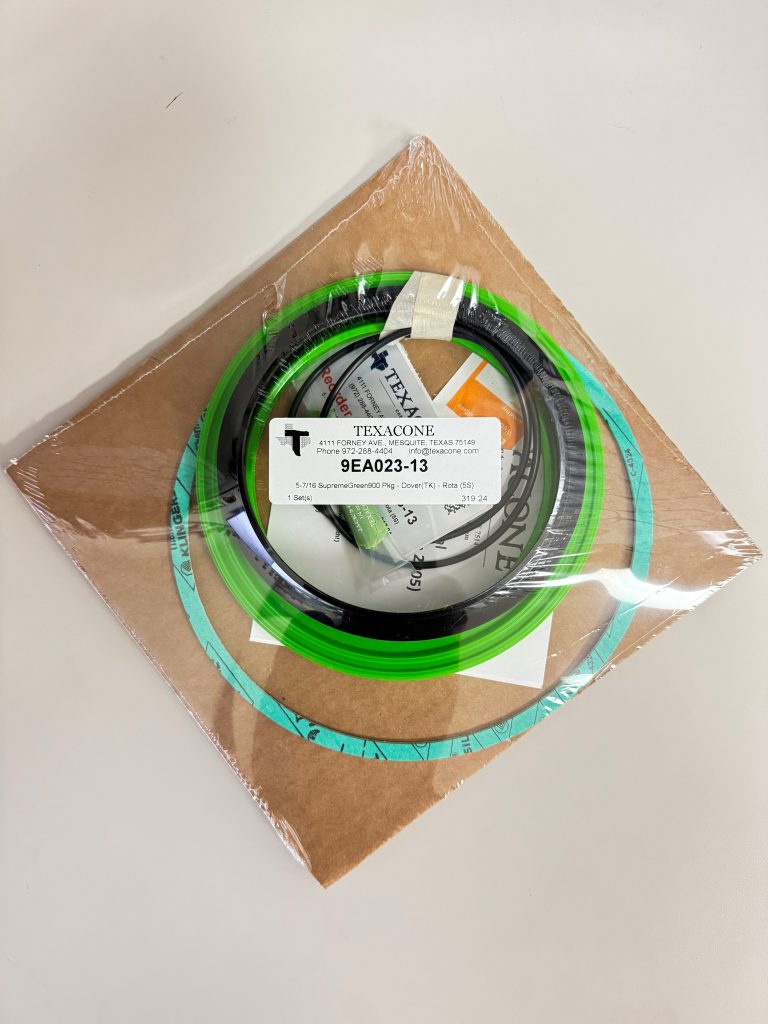
For example, CED lists Texacone product 9EA023-13 as a Dover Rota hydraulic elevator packing designed for a 5-7/16 inch plunger, including components such as a Rota wiper, Rota seal, O-ring, gasket, and optional wear ring.
The Hidden Link Between Seal Quality and Cavitation
Cavitation is often blamed on the pump, valve, oil level, suction line, or fluid condition. Those causes matter, but sealing problems can feed the same failure chain.
Here is the mechanical path:
- A worn packing lip allows leakage or bypass.
- The system loses controlled oil retention at the cylinder head.
- Oil can aerate or foam as it leaks, returns, or gets disturbed.
- Oil level, pressure stability, or suction conditions become less reliable.
- The pump works harder under unstable conditions.
- Vibration, heat, and cavitation symptoms increase.
- Component wear accelerates.
CED’s hydraulic power unit resource explains that hydraulic oil lubricates parts, transfers energy, supports valve performance, protects seals, and helps keep the system stable. The same guide notes that excess heat can thin oil, affect valve control, reduce leveling accuracy, increase leakage, and shorten component life.
When an Elevator Cylinder Leak Points to More Than a Seal
An elevator cylinder leak should never be treated as a surface-level nuisance. The visible oil may only be the symptom.
A proper evaluation should ask:
- Is the plunger scratched, rusted, or scored?
- Is the packing compatible with the cylinder head?
- Was the previous seal installed correctly?
- Is the system overpressurized?
- Is oil temperature too high?
- Is the wiper keeping contaminants out?
- Is oil returning cleanly?
- Is the pit collecting oil or water?
- Is a scavenger pump replacement needed?
- Is the power unit showing noise, foaming, or vibration?
A seal can only perform properly when the surrounding system is stable. If the plunger is damaged, the new packing may fail early. If the oil is hot and degraded, the seal material can harden faster. If the scavenger system is not managing pit accumulation, environmental and housekeeping issues can get worse.
Scavenger Pump Replacement Protects the Pit and the Contract
A scavenger pump is not a decorative accessory. In hydraulic elevator systems, it helps manage fluid accumulation that can collect in the elevator pit.
CED’s blog on its heavy-duty elevator scavenger pump explains that an elevator scavenger pump helps keep hydraulic elevator systems clean and safe by removing oil and water that collect in the elevator pit.
A properly selected scavenger pump replacement can help contractors:
- Reduce pit fluid buildup
- Support cleaner maintenance conditions
- Limit fluid-related malfunction risk
- Improve housekeeping around the elevator system
- Protect client properties from oil-related complaints
- Support smoother ongoing service
CED’s Heavy Duty Elevator Scavenger Pump is designed for elevator pit applications, complies with ASME A17.1 safety code, and includes a 1/3 HP motor with 101 GPH pump capacity.
How Premium Parts Support Hydraulic Elevator Repair
A good hydraulic repair is not just about stopping the current leak. It is about preventing the next failure.
Premium packings, seals, and scavenger components help support:
- Stable pressure
- Cleaner operation
- Fewer callbacks
- Better ride quality
- Lower oil loss
- Longer component life
- Better client confidence
- More predictable maintenance planning
- Stronger service contract performance
CED’s broader role as an elevator parts distributor includes stocking products, ensuring fast delivery, providing expert support, and building vendor relationships with leading manufacturers.
That matters when a contractor needs the right part fast. Downtime costs the building owner. Repeat callbacks cost the contractor. Wrong parts cost everyone.
Where Hydraulic Power Units Fit Into the Conversation
The cylinder, seal package, scavenger pump, and hydraulic power unit all work together. When one area fails, the symptoms can appear somewhere else.
A leaking cylinder head may contribute to oil loss. Oil loss may affect the hydraulic power unit. A stressed power unit may show heat, vibration, pump noise, or valve chatter. A cavitating pump may damage internal components and create more instability.
CED’s hydraulic elevator power units use components such as Seim pumps, Imperial motors, and Maxton valves, with standard features that include oil level and temperature gauges, plus optional features such as oil coolers, pressure gauges, scavenger pumps, and pipe rupture valves.
For deeper troubleshooting, our related guide on hydraulic power unit heat and vibration is a useful internal resource.
Precision Replacement Starts With Correct Identification
Before ordering Texacone packings and seals, field teams should confirm the exact cylinder and head details. Guessing can lead to downtime, poor fit, and another leak.
A smart parts request should include:
- Cylinder manufacturer
- Plunger diameter
- Existing packing information
- Head configuration
- Equipment model
- Application details
- Photos when available
- Any known leak symptoms
- Whether a scavenger pump is already installed
- Current oil condition concerns
- Urgency and location
CED supports elevator professionals nationwide through multiple branch locations, including South Windsor, CT, Columbia, MD, Long Beach, CA, Arlington, TX, and Chicago, IL.
Why Contractors Trust a Distributor With Deep Vendor Relationships
Hydraulic elevator systems are too specialized for random parts sourcing. The wrong seal material, wrong dimension, wrong kit, or wrong pump can create safety, reliability, and warranty problems.
CED Elevator & Electrical supports modernization, construction, OEM, service, and repair segments of the elevator industry.
Our role is to help contractors source reliable parts quickly, including:
- Texacone packings and seals
- Hydraulic elevator power units
- Heavy-duty scavenger pumps
- Elevator products
- Service and repair components
- Modernization materials
- Field-ready replacement parts
For service teams, that means fewer part-matching headaches and stronger support when contract performance depends on speed.
Seals Are Small Parts With Big Consequences
A hydraulic elevator seal may be small compared with the cylinder, pump, motor, or valve, but its impact is huge. Precision packings help control oil, pressure, air intrusion, contamination, and ride stability.
When low-grade seals develop micro-tears or when damaged plungers chew through replacement parts, the system can move toward leakage, aeration, oil loss, overheating, cavitation symptoms, and environmental oil hazards.
That is why premium Texacone packings and seals, proper identification, and dependable scavenger pump replacement are not optional details. They are contract-protecting decisions.
At CED Elevator & Electrical, we help elevator professionals source the right hydraulic elevator repair parts before a minor leak becomes a major system failure.
FAQs
What causes cavitation in a hydraulic elevator system?
Cavitation can be caused by low fluid pressure, aerated oil, oil loss, poor suction conditions, heat, fluid contamination, or hydraulic instability. Worn seals and leaking packings can contribute by allowing oil loss, air intrusion, and pressure irregularity.
How do Texacone packings and seals help prevent elevator cylinder leaks?
Texacone packings and seals help maintain a tight seal around the moving cylinder or plunger area. This helps retain hydraulic oil, control pressure, reduce leakage, and support smoother elevator operation.
When should packings be replaced during hydraulic elevator repair?
Packings should be evaluated when oil appears around the cylinder head, when the elevator shows unstable movement, when pit oil accumulation increases, or when inspection finds worn, hardened, torn, or damaged sealing components.
What does a scavenger pump do in a hydraulic elevator?
A scavenger pump helps manage oil and water accumulation in the elevator pit. CED’s heavy-duty elevator scavenger pump is designed for elevator pit applications and offers 101 GPH pump capacity.
Why should contractors avoid cheap hydraulic elevator seals?
Cheap or poorly matched seals can fail early, increase callbacks, allow oil leakage, contribute to unstable hydraulic performance, and raise client contract risk. The correct premium part helps protect system reliability and service profitability.