
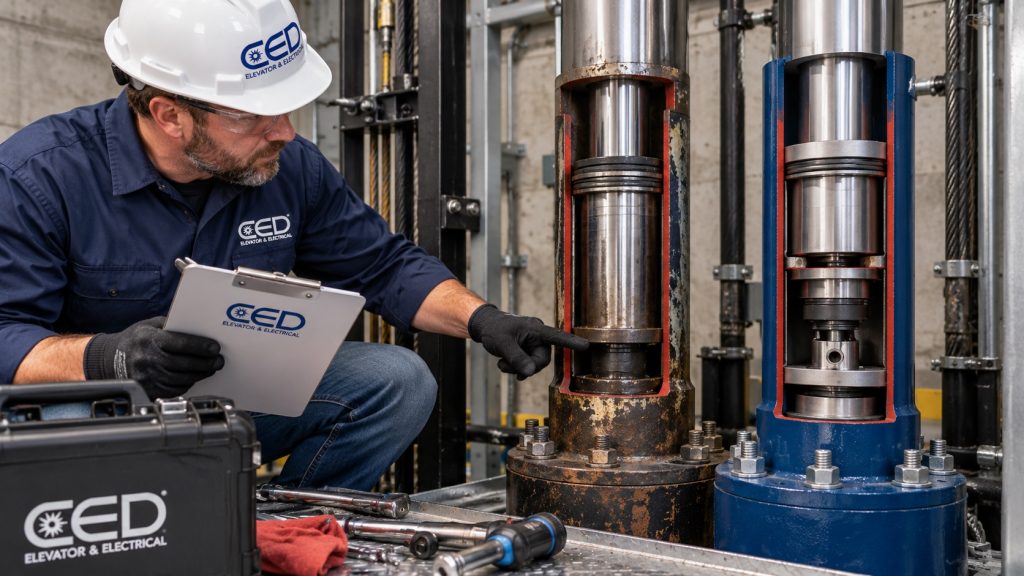
The main difference between a single-bottom elevator cylinder and a double-bottom cylinder is the added safety bulkhead. A single-bottom cylinder uses one welded bottom plate, creating a risk of uncontrolled oil loss if the bottom fails. A double-bottom cylinder includes an internal safety bulkhead with a restricted opening designed to slow oil loss and elevator descent following an outer bottom failure. Modern hydraulic elevator jack systems may also include protective PVC casings to reduce underground corrosion.
Why Hydraulic Elevator Cylinder Design Matters
Hydraulic elevators depend on pressurized oil to raise and support the elevator car.
The hydraulic elevator jack contains a cylinder and a moving plunger. When the pump forces hydraulic oil into the cylinder, the plunger rises and lifts the elevator car.
At CED Elevator & Electrical, we help elevator contractors source hydraulic components, replacement parts, and modernization materials for reliable elevator operation.
However, not all hydraulic cylinders have the same safety features.
Older underground installations may contain single-bottom cylinders that lack the protective bulkhead found in newer designs.
Understanding the difference is essential when evaluating aging equipment.
What Is a Single-Bottom Elevator Cylinder?
A single-bottom elevator cylinder is an older hydraulic jack design featuring one metal plate welded to the bottom of the cylinder.
This construction was common before changes to elevator safety standards during the early 1970s.
The primary concern involves the welded bottom connection.
Underground moisture, soil conditions, and corrosion can gradually weaken the cylinder or its welded joints.
If the bottom fails completely, hydraulic oil may escape rapidly, allowing the elevator to descend at an unsafe speed.
Common Single-Bottom Cylinder Risks
- Corrosion around the bottom weld
- Uncontrolled hydraulic oil loss following a major failure
- Sudden elevator descent
- Environmental contamination from leaking oil
- Expensive emergency repairs and prolonged downtime
Not every older cylinder has deteriorated, but its design lacks the additional bottom-failure protection of a safety bulkhead.
What Is a Double-Bottom Elevator Cylinder?
A double-bottom cylinder contains an additional internal plate, commonly called a safety bulkhead.
This bulkhead separates the pressurized hydraulic oil from the outer bottom cap.
A small opening allows restricted oil flow if the outer bottom fails.
Instead of allowing hydraulic fluid to escape rapidly, the restricted opening is designed to limit the rate of descent.
Double-bottom designs became standard for new in-ground hydraulic elevator installations following code changes in the early 1970s.
Advantages of Double-Bottom Cylinders
- Additional protection against outer bottom failure
- Controlled oil release through a safety-bulkhead opening
- Reduced risk of uncontrolled descent from that failure mode
- Improved hydraulic jack safety compared with traditional single-bottom construction
However, double-bottom cylinders can still develop corrosion, leaks, and structural problems.
A double-bottom design is not the same as complete corrosion protection.
Single-Bottom vs. Double-Bottom Elevator Cylinders
| Feature | Single-Bottom Cylinder | Double-Bottom Cylinder |
|---|---|---|
| Bottom construction | One welded plate | Outer bottom plus safety bulkhead |
| Failure protection | No internal safety bulkhead | Restricted oil release if outer bottom fails |
| Common installation period | Older, typically pre-1970s | Common following early-1970s code changes |
| Corrosion risk | Present | Still present |
| Underground protection | Often unprotected | May include PVC protection |
| Modernization concern | Safety and regulatory review | Condition, corrosion, and compliance |
The correct replacement decision depends on the installed equipment, governing code, and documented condition.
Why Underground Corrosion Is a Serious Concern
Corrosion can affect both single-bottom and double-bottom hydraulic elevator jacks.
Groundwater, soil chemistry, and long-term exposure can weaken underground steel components.
Because much of an in-ground cylinder remains buried, visible inspections cannot reveal every potential problem.
Modern installations commonly use protective PVC casings or other approved corrosion-resistant arrangements to isolate underground cylinders from surrounding soil.
According to the Wisconsin Department of Safety and Professional Services, double-bottom safety bulkheads improved protection against bottom failure, but corrosion remained a concern along cylinder walls and welded joints.
We recommend evaluating corrosion protection separately from cylinder bottom design.
Are Single-Bottom Elevator Cylinders Still Code-Compliant?
Code compliance depends on the elevator’s location, installation date, applicable regulations, and alterations.
ASME A17.1 introduced additional safety requirements for new in-ground hydraulic cylinder installations during the early 1970s.
However, an existing single-bottom cylinder does not automatically require replacement under every jurisdiction’s rules.
Some jurisdictions require replacement, approved protective devices, additional testing, or other corrective measures.
Building owners should consult their licensed elevator contractor and local authority having jurisdiction before determining compliance.
How to Tell Which Hydraulic Elevator Jack You Have
Identifying the existing cylinder design can be difficult because the bottom is buried underground.
We recommend reviewing:
- Original elevator installation records
- Hydraulic jack manufacturer documentation
- Previous modernization and replacement records
- Inspection and pressure-test reports
- Available cylinder specifications
Installation age provides useful context but does not conclusively identify the equipment.
A qualified elevator contractor should confirm the configuration through appropriate records and evaluation.
When Should a Hydraulic Elevator Cylinder Be Replaced?
Replacement may become necessary when an older jack develops significant corrosion, structural defects, unexplained hydraulic oil loss, or fails required testing.
Other considerations include mandatory code upgrades and broader elevator modernization plans.
Watch for unusual oil consumption, recurring leveling problems, or unexpected changes in hydraulic performance.
These symptoms do not necessarily prove cylinder failure. Worn packings, valves, and other hydraulic components can produce similar problems.
Our related article on hydraulic elevator packings and seals explains how seal deterioration affects hydraulic performance.
Suspected underground cylinder leaks require prompt professional investigation.
Planning a Hydraulic Elevator Jack Modernization
Replacing an underground hydraulic jack requires careful planning.
Contractors must consider cylinder dimensions, plunger specifications, travel height, working pressure, existing borehole conditions, corrosion protection, and applicable safety requirements.
Environmental controls may also be necessary when removing old cylinders or contaminated materials.
At CED Elevator & Electrical, we support contractors with hydraulic fittings, packings, power units, and related modernization components.
Explore our elevator modernization products to coordinate compatible materials for hydraulic system upgrades.
Frequently Asked Questions
Why are single-bottom elevator cylinders considered a safety concern?
Older single-bottom cylinders lack a safety bulkhead. Severe corrosion or bottom weld failure can cause rapid oil loss and uncontrolled elevator descent.
Are double-bottom hydraulic cylinders safer?
Yes, their safety bulkhead provides additional protection against outer bottom failure. However, proper maintenance and corrosion protection remain essential.
Do all single-bottom elevator cylinders need replacement?
Not necessarily. Requirements depend on local elevator regulations, equipment condition, and approved safety alternatives.
Can a double-bottom elevator cylinder still leak?
Yes. Corrosion, damaged welds, worn seals, and other defects can cause leaks even with a double-bottom design.
Source Hydraulic Elevator Modernization Parts From CED
Understanding the difference between single-bottom and double-bottom elevator cylinders helps contractors and building owners make better safety and modernization decisions.
At CED Elevator & Electrical, we help elevator professionals source dependable hydraulic components, repair materials, and modernization products.
Whether you’re evaluating an aging hydraulic elevator jack or planning a larger equipment upgrade, our team can help coordinate compatible components.