
When elevator doors keep reopening without a visible obstruction, the problem often involves a dirty or misaligned light curtain, faulty infrared sensors, damaged wiring, mechanical resistance, or incorrect door operator signals. Modern elevator doors use electronic reopening devices to detect objects and protect passengers. If these systems receive a false obstruction signal or encounter excessive closing resistance, the doors may reverse unexpectedly. A qualified elevator technician should inspect the detector, door tracks, operator controls, and safety circuits before replacing components.
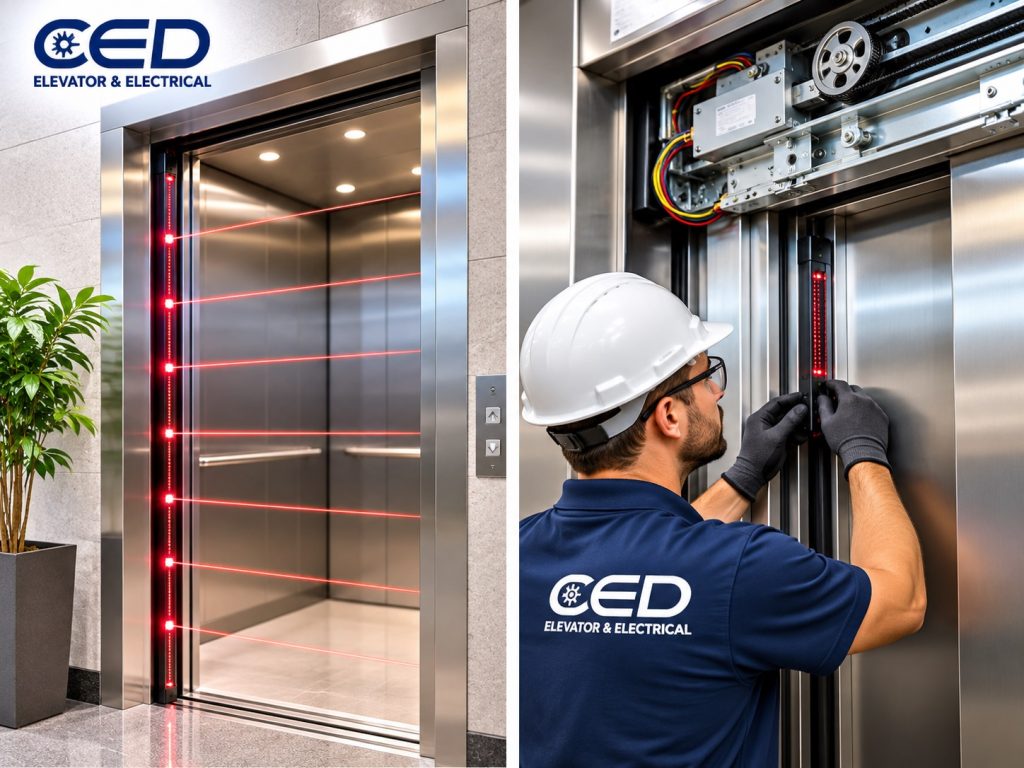
Why Do Elevator Doors Keep Reopening With Nothing in the Way?
Elevator doors should open, remain available for passengers, and close smoothly before the elevator moves.
However, repeated reopening can interrupt building operations, increase passenger wait times, and generate frequent maintenance calls.
At CED Elevator & Electrical, we help elevator contractors source door operators, light curtains, sensors, and replacement components for maintaining dependable elevator operation.
When doors begin closing but immediately reverse, the problem does not always involve the sensor itself.
Electrical signals, mechanical resistance, and door operator settings can produce similar symptoms.
Understanding which component triggers the reopening command is the first step toward an effective repair.
7 Common Causes of Elevator Doors Reopening Unexpectedly
1. Dirty or Misaligned Light Curtain Sensors
Modern elevator doors often use infrared light curtains to detect passengers and objects within the doorway.
A light curtain elevator system contains multiple infrared beams between transmitter and receiver units.
When an object interrupts the detection field, the system sends a signal that causes the doors to stop or reopen.
However, dust, fingerprints, moisture, and misaligned sensor edges can produce false detection signals.
Recommended Solution: A qualified technician should inspect sensor cleanliness, alignment, mounting hardware, and detection performance.
Manufacturer-approved cleaning methods should be followed to avoid damaging optical components.
2. Sunlight or Reflective Surface Interference
Some elevator door sensor problems occur only at certain times of day.
Strong sunlight, reflective surfaces, or nearby infrared equipment can interfere with susceptible detection systems.
For example, a light curtain may experience intermittent false triggering when exposed to certain lighting conditions.
Recommended Solution: Technicians should evaluate environmental interference, sensor positioning, wiring, and equipment compatibility.
Not every light curtain is equally sensitive to external lighting.
3. Damaged Sensor Wiring or Loose Connections
Elevator door detectors rely on electrical connections to communicate with door operators and controllers.
Repeated door movement can place stress on improperly routed or worn cables.
Intermittent connections, damaged insulation, unstable power supplies, or failing electronic components may trigger unexpected reopening signals.
Recommended Solution: Qualified elevator personnel should inspect wiring integrity, connectors, power supply conditions, and detector status indicators.
Damaged components should be repaired or replaced according to manufacturer specifications.
4. Debris or Resistance in the Door Tracks
Not every unexpected door reversal is caused by an infrared sensor.
Dirt, small objects, or mechanical obstructions inside the sill tracks can prevent doors from moving freely.
When resistance exceeds a door operator’s configured threshold, compatible systems may interpret the condition as an obstruction and reverse.
Recommended Solution: Inspect the sill, track, hangers, rollers, and mechanical alignment.
We recommend identifying the source of resistance before changing operator force or speed settings.
5. Worn Elevator Door Operator Components
Door operators control the movement of elevator doors through motors, belts, linkages, and electronic controls.
As these components age, mechanical wear can create irregular movement or excessive closing resistance.
Common warning signs include:
- Unusual noise during closing
- Doors hesitating before reversing
- Inconsistent closing speed
- Repeated operator fault indications
- Excessive vibration or mechanical movement
Recommended Solution: Evaluate the operator assembly, motor, drive components, and associated mechanical equipment.
Repeated failures may justify replacing aging operator components rather than continuing isolated repairs.
6. Door Interlock or Clutch Alignment Problems
Elevator doors depend on correctly aligned clutch and interlock components.
A worn clutch, misaligned pickup roller, or defective door contact may prevent the system from confirming that the doors have closed and locked.
Depending on the controller and operator configuration, these conditions can cause retries, fault shutdowns, or repeated door cycles.
Recommended Solution: Qualified technicians should verify clutch engagement, interlock operation, door alignment, and controller feedback.
Door safety circuits must never be bypassed to eliminate reopening problems.
7. Incorrect Door Controller Signals or Settings
Some reopening problems originate in the controller or operator interface.
Incorrect timing parameters, intermittent reopening inputs, faulty position feedback, or unexpected door-open commands may interfere with normal closing.
For example, GAL MOVFR systems coordinate reopening signals with commands from the elevator controller.
A fault in that communication path can produce symptoms resembling a defective detector.
Recommended Solution: Review diagnostic information, signal states, fault history, and manufacturer-specific control procedures before changing settings or replacing equipment.
Elevator Door Reopening Troubleshooting Chart
| Symptom | Possible Cause | Recommended Inspection |
|---|---|---|
| Doors reverse immediately | Light curtain problem | Sensor alignment and detection |
| Reopening at certain times | Light interference | Ambient lighting and infrared sources |
| Random reopening | Wiring or power fault | Cables, connections, supply voltage |
| Doors hesitate before reversing | Mechanical resistance | Tracks, rollers, and operator |
| Doors close but fail to register | Interlock problem | Clutch and door-lock feedback |
| Repeated open-close cycles | Controller or operator fault | Signals, settings, and diagnostics |
These symptoms are diagnostic clues. Proper fault identification requires qualified elevator personnel.
Why Elevator Door Safety Devices Matter
Door reopening systems are important passenger protection components.
According to the U.S. Access Board’s ADA Accessibility Standards, covered automatic elevator doors must include reopening devices that stop and reverse closing when an obstruction is detected.
A malfunctioning sensor can create repeated operational disruptions, but disabling the detector creates additional safety risks.
We recommend removing an elevator from service when a safety-related door defect is suspected, pending professional assessment.
When Should You Replace an Elevator Light Curtain or Door Operator?
Some problems can be corrected through cleaning, alignment, or replacement of individual components.
However, recurring failures may indicate that more extensive upgrades are necessary.
Modernization becomes worth considering when:
- Light curtains repeatedly malfunction despite proper adjustment.
- Existing detectors are obsolete or difficult to replace.
- Door operators have excessive mechanical wear.
- Controllers cannot reliably communicate with replacement devices.
- Service calls continue increasing without lasting improvements.
At CED Elevator & Electrical, we supply elevator door operators and replacement parts, including sensors, door edges, belts, clutches, interlocks, and operator assemblies.
For additional technical guidance, read our related article, Troubleshooting Elevator Door Operators: GAL vs. MAC vs. ECI Retrofit Kits.
Frequently Asked Questions
Why do elevator doors keep opening and closing by themselves?
Repeated door cycles may result from false sensor signals, mechanical resistance, damaged wiring, controller problems, or abnormal door position feedback.
Can a dirty elevator light curtain cause doors to reopen?
Yes. Dust, moisture, or contamination on the infrared sensors can interfere with detection and cause unexpected reopening.
How do you know if an elevator door sensor is bad?
Common symptoms include intermittent reopening, failure to detect obstructions, and recurring detector fault indications. Professional testing is required to confirm the cause.
Can elevator doors reopen because of mechanical problems?
Yes. Worn rollers, misaligned tracks, damaged clutches, or excessive closing resistance can trigger door reversals.
Should a light curtain be replaced or repaired?
The decision depends on the component’s condition, manufacturer recommendations, compatibility, and whether the problem involves the detector or another part of the door system.
Source Elevator Door Parts From CED Elevator & Electrical
Repeated elevator door reopening can disrupt building operations and indicate problems involving important safety components.
At CED Elevator & Electrical, we help elevator contractors source dependable door operators, infrared light curtains, sensors, interlocks, and replacement components.
With more than 25 years of industry experience and multiple distribution locations, we support repair and modernization projects nationwide.
Whether you’re troubleshooting an elevator door sensor problem or planning a complete operator upgrade, our team can help identify compatible replacement products.