
An elevator controller replacement can modernize an aging system without requiring the removal of every reusable component. When the machine, rails, cab, hydraulic equipment, and structural system remain serviceable, contractors may replace the controller while coordinating new door operators, traveling cable, hoistway wiring, and signal fixtures. Non-proprietary controllers are designed to provide broader access to diagnostics, documentation, replacement parts, and qualified service providers. SmartRise specifications state that proprietary tools should not be required for adjustment, maintenance, testing, or repair. Virginia Controls also identifies its hydraulic and traction systems as using non-proprietary software.
A modernization bid can become difficult when the controller, door operator, fixtures, and wiring are treated as separate orders. One mismatched voltage, missing interface board, or delayed traveling cable can hold up the entire job.
At CED Elevator & Electrical, we help contractors build coordinated elevator modernization packages that include controllers, cable, duct, door equipment, hydraulic components, and hall and cab fixtures.
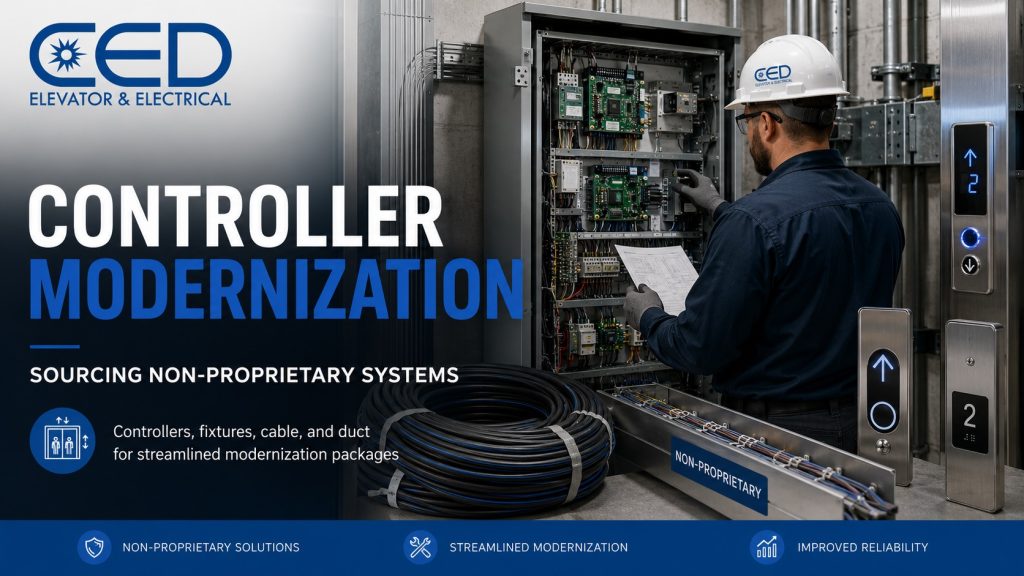
When Does an Elevator Controller Need Replacement?
The controller acts as the operating center of the elevator. It receives calls, monitors safety circuits, controls movement, manages leveling, communicates with door equipment, and supports emergency operations.
An elevator controller replacement may be appropriate when the existing system has:
- Obsolete circuit boards or relays
- Limited diagnostic capabilities
- Recurring shutdowns
- Unsupported software
- Difficult-to-source replacement parts
- Excessive wiring modifications
- Poor leveling or dispatch performance
- Compatibility problems with newer fixtures or door equipment
A new controller does not automatically require a total elevator replacement. The correct scope depends on the condition of the machine, motor, hydraulic power unit, door system, wiring, fixtures, cab, rails, and safety equipment.
Targeted Component Refresh vs. Complete Tear-Out
A targeted modernization replaces the components creating the greatest service and performance problems while retaining equipment that remains safe and serviceable.
A partial package may include:
- New controller and drive
- Updated door operator
- New car operating panel
- Hall stations and position indicators
- Traveling and hoistway cable
- Code-required monitoring equipment
- New starters, contactors, or disconnects
This approach may fit a hydraulic or low-rise traction elevator with a sound mechanical system but outdated controls and fixtures.
A more complete modernization may be required when the project also involves a failing machine, deteriorated hydraulic equipment, major door problems, extensive wiring damage, or significant code and accessibility upgrades. Our modernization upgrade versus replacement guide can help frame the initial equipment review.
Why Contractors Specify Non-Proprietary Controllers
A proprietary controller may restrict access to software, service tools, diagnostic functions, or replacement parts. That can limit the building owner’s maintenance options after installation.
A well-specified non-proprietary system should provide:
- Onboard diagnostics
- Field-adjustable settings
- Complete wiring diagrams
- Service and adjustment manuals
- Replacement-part availability
- Technical support
- Access for qualified elevator contractors
- No mandatory proprietary service tool
SmartRise’s published controller specification states that its controllers are non-proprietary, proprietary tools are not required, manuals and wiring diagrams are provided, and replacement parts remain available for the equipment’s service life.
Virginia Controls states that its traction, hydraulic, and custom controllers feature non-proprietary software and industrial-grade components. Its controller support also includes genuine parts and prints from its Richmond, Virginia facility.
The word “non-proprietary” should not be accepted without details. Before approving a controller, confirm who can purchase parts, who receives technical support, whether passwords or laptops are required, and whether the building owner receives current prints and manuals.
SmartRise Controller Modernization
CED supplies SmartRise controllers for hydraulic and traction applications as part of our modernization offering.
SmartRise describes its products as open-market controllers with universal boards for hydraulic and traction systems. Its controller specifications also emphasize onboard diagnostic and adjustment capabilities.
A SmartRise controller modernization may be coordinated with:
- New traveling cable
- Hoistway wiring
- Door operator interfaces
- Positioning equipment
- Hall-call wiring
- Car operating panels
- Emergency communication
- Monitoring and data connections
The complete job data should be reviewed before the controller is released for production. Important details include elevator type, travel, speed, capacity, landings, openings, motor or pump data, door operation, fixture requirements, power supply, machine-room arrangement, and applicable code edition.
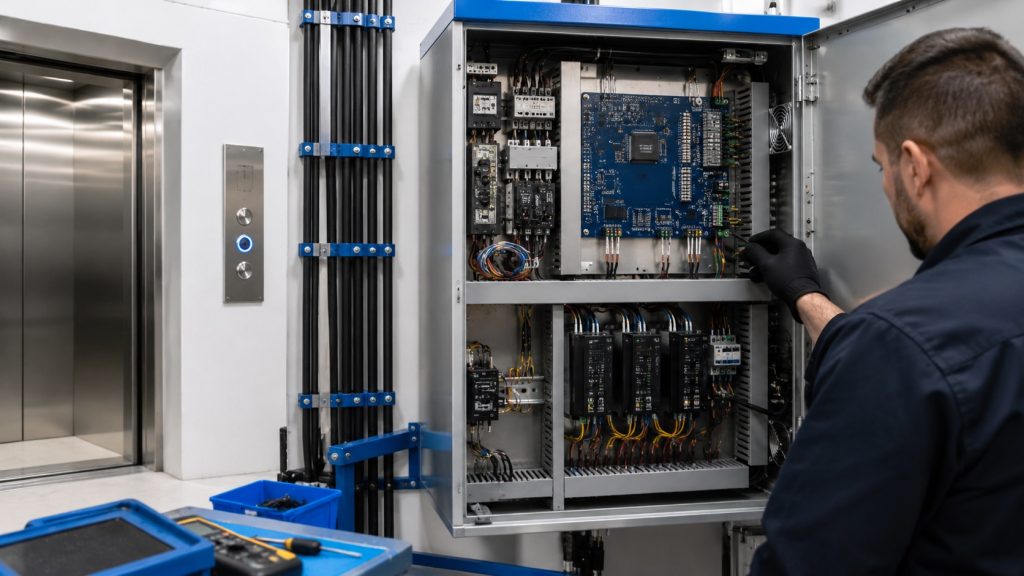
Coordinating Door Operators and Push Button Fixtures
A controller upgrade often exposes problems elsewhere in the system. An old door operator may not provide the reliability expected from the new controls, while worn hall stations can undermine the appearance of an otherwise successful modernization.
CED supplies elevator door operators and parts along with ECC hall and cab fixtures. Available fixture selections include standard, integrated, vandal-resistant, stainless-steel, square, and round push-button configurations.
Ordering elevator push button fixtures with the controller allows contractors to coordinate:
- Operating voltage
- Illumination
- Button contacts
- Serial or discrete communication
- Braille and marking requirements
- Faceplate dimensions
- Hall lantern and indicator interfaces
Bundle Cable, Duct, and Fixtures Before Mobilization
Controller modernization requires more than the controller cabinet. Missing wireway fittings, cable supports, fixture wiring, or traveling cable can create expensive return trips.
CED stocks modernization materials that include SmartRise controllers, hoistway and traveling cable, duct and fittings, GAL Canada linear door operators, and ECC hall and cab fixtures.
A coordinated single-shipment package may include:
- Controller and drive components
- Preselected traveling cable
- Hoistway conductors
- Wire duct, covers, and fittings
- Door operator equipment
- Hall and cab fixtures
- Positioning and communication wiring
- Installation hardware and accessories
Our traveling cable selection guide and hoistway duct guide can help contractors map the cable and raceway package before ordering.
What Affects Elevator Modernization Package Cost?
Elevator modernization package cost depends on the elevator type, number of landings, speed, controller configuration, door equipment, fixture design, wiring condition, travel distance, machine-room layout, code scope, and amount of field labor required.
A controller-only quote may look less expensive but leave major interface work outside the proposal. A coordinated package creates a clearer material scope and reduces the risk of change orders caused by missing components.
Source a Complete Modernization Package
CED Elevator & Electrical supports elevator contractors throughout Connecticut, New England, the Northeast, and additional markets through regional branches. Our modernization inventory includes controllers, door equipment, cable, duct, fixtures, hydraulic fittings, and installation supplies.
Request a modernization quote with the controller survey, equipment photos, wiring requirements, fixture schedule, and door information. We can help organize the parts into a job-ready package that keeps mechanics moving.
Frequently Asked Questions
What is a non-proprietary elevator controller?
A non-proprietary controller is designed to allow qualified contractors to access diagnostics, documentation, parts, and adjustment functions without being locked into one maintenance provider.
Can only the elevator controller be replaced?
Yes, when the surrounding mechanical, electrical, and safety equipment remains compatible and serviceable. A complete survey should identify required interface upgrades.
Should fixtures be ordered with the controller?
Coordinating fixtures with the controller helps prevent voltage, communication, illumination, and wiring conflicts.