
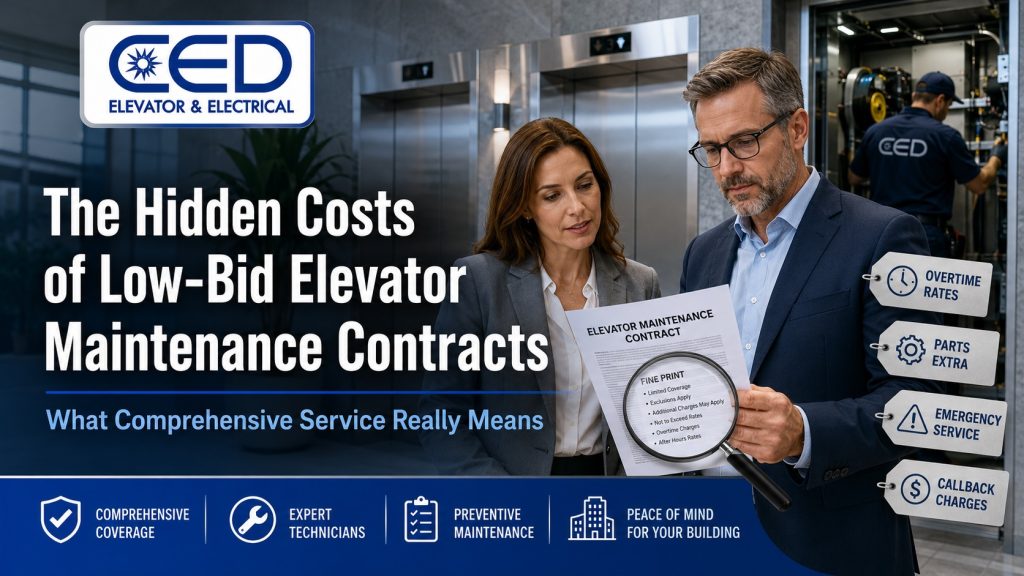
A low-bid elevator maintenance contract may look cheaper upfront, but the real cost often appears later through excluded parts, overtime labor, emergency callback fees, slower response times, and limited preventive service. A comprehensive contract should clearly define scheduled visits, covered components, emergency service terms, response expectations, documentation, testing support, and parts availability. In Connecticut, elevator installation, repair, and maintenance work must be performed under proper elevator licensing, which makes contract scope and qualified labor especially important for building owners.
Why the Lowest Monthly Price Can Become the Most Expensive Choice
When a building owner compares elevator maintenance proposals, the lowest number can feel like the safest budget decision. On paper, one contract may look hundreds or thousands less per year. In practice, that low monthly rate may only cover basic visits, while everything else becomes an add-on.
At CED Elevator & Electrical, our work supports the modernization, construction, OEM, service, and repair sectors of the elevator industry, so contract quality matters from both a performance and parts-support perspective. For building owners, managers, and maintenance teams, the real goal is not the cheapest agreement. The goal is fewer shutdowns, clearer costs, safer operation, and faster access to the right parts.
For related support, explore our elevator products, replacement parts guide, hydraulic power unit troubleshooting guide, and modernization package.
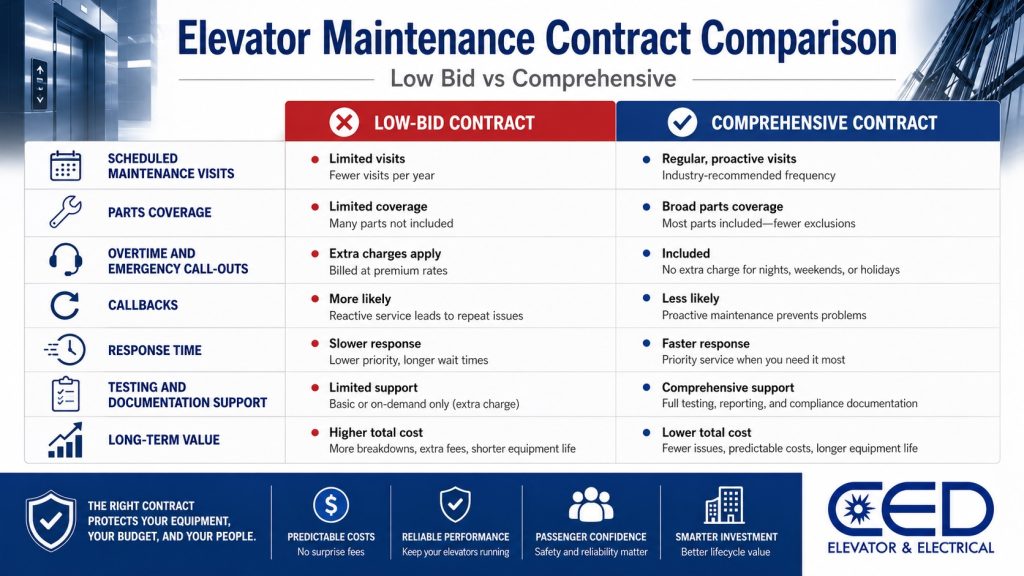
Elevator Maintenance Contract Comparison: Low Bid vs Comprehensive
A strong elevator maintenance contract comparison should look past the monthly invoice and focus on what happens when the equipment needs attention.
| Contract Area | Low-Bid Risk | Comprehensive Expectation |
|---|---|---|
| Scheduled visits | Fewer or vague visits | Clear preventive service schedule |
| Parts | Many exclusions | Defined parts coverage |
| Overtime | Premium add-on fees | Clearly stated after-hours terms |
| Emergency callbacks | Extra charges | Predictable response terms |
| Testing support | Limited paperwork | Better reporting and documentation |
| Response time | Lower priority | Clear service expectations |
| Long-term value | More surprise costs | Better lifecycle planning |
A low-bid agreement may be acceptable for a simple building with low traffic and newer equipment, but it becomes risky when the elevator is older, heavily used, hydraulic, or critical for accessibility.
What Does Elevator Maintenance Include?
Property managers often ask, “What does elevator maintenance include?” The answer should be written in the contract, not assumed during a breakdown.
A more complete maintenance scope may include:
- Door operator and door roller checks
- Controller and relay inspection
- Hydraulic fluid, seals, pump, and valve review
- Brake, cable, pulley, and safety system checks
- Lubrication and adjustment
- Callback tracking
- Code-related documentation support
- Parts recommendations before failure
- Clear repair authorization process
CED’s preventive maintenance guidance notes that routine service helps catch worn or failing elevator parts before a shutdown, while unexpected failures can bring emergency labor charges, rush delivery fees, downtime, and tenant inconvenience.
The Hidden Fee Categories Building Owners Miss
1. Parts That Are Not Actually Covered
Some low-cost contracts exclude many common wear items. The contract may cover labor for a visit, but not the actual component needed to fix the problem. That can turn a “maintenance” contract into a pay-as-needed repair arrangement.
For buildings that need dependable availability, CED maintains a broad elevator parts catalog and supports maintenance, repair, and modernization needs through multiple product categories.
2. Overtime and After-Hours Rates
Elevator problems do not wait for business hours. A shutdown on a Friday night, weekend, or holiday can trigger premium labor rates if the contract does not include after-hours support. CED’s preventive maintenance guidance notes that breakdowns often happen at inconvenient times, when repair costs and disruption are highest.
3. Repeat Callbacks
Frequent callbacks are often a sign that the underlying issue is not being solved. On hydraulic systems, warning signs such as slow travel, inconsistent leveling, valve chatter, oil foaming, breaker trips, and frequent callbacks may point to deeper power unit trouble. A low-bid contract may treat each issue separately, while a stronger service approach looks for the pattern.
4. Compliance and Documentation Gaps
Inspections, testing, and documentation expectations vary by jurisdiction, but owners remain responsible for compliance. Cal/OSHA states that annual reinspections are the responsibility of elevator owners and allow the authority to review device activity, maintenance, safety orders, and required periodic tests. Even outside California, the principle is useful: the owner needs records, communication, and clarity.
What “Comprehensive” Should Really Mean
A comprehensive elevator maintenance contract should not be vague. It should define:
- Visit frequency
- Included labor
- Included and excluded parts
- Response windows
- Callback terms
- Overtime rules
- Emergency service process
- Testing and reporting support
- Repair authorization process
- Parts sourcing strategy
Comprehensive does not mean unlimited. It means transparent. The building owner should know what is covered, what is not covered, and how service will be handled before the elevator fails.
A Cheap Contract Can Create Expensive Downtime
The hidden costs of low-bid elevator maintenance contracts usually appear when the building can least afford them. Extra parts, overtime labor, emergency callback charges, slow response, and repeat issues can erase any upfront savings.
At CED Elevator & Electrical, our approach supports elevator professionals and building teams with dependable parts, modernization materials, hydraulic power unit solutions, controller components, traveling cable, fittings, and repair support. For better long-term value, start with a contract that protects the equipment, the budget, and the people who rely on the elevator every day.