
How often an elevator should be serviced depends on its age, condition, design, usage, operating environment, manufacturer guidance, and Maintenance Control Program. High-use or aging equipment may need more frequent attention than newer, lightly used units. The proper schedule should be based on the individual elevator, applicable code requirements, maintenance provider recommendations, and the local Authority Having Jurisdiction.
Building owners and facility managers often ask whether elevators need monthly, quarterly, or another fixed service interval.
There is no single maintenance frequency that is correct for every elevator.
A high-traffic passenger elevator in a hospital may have very different maintenance needs from a lightly used low-rise hydraulic elevator. The goal is to build the schedule around the equipment rather than forcing every unit into the same calendar.
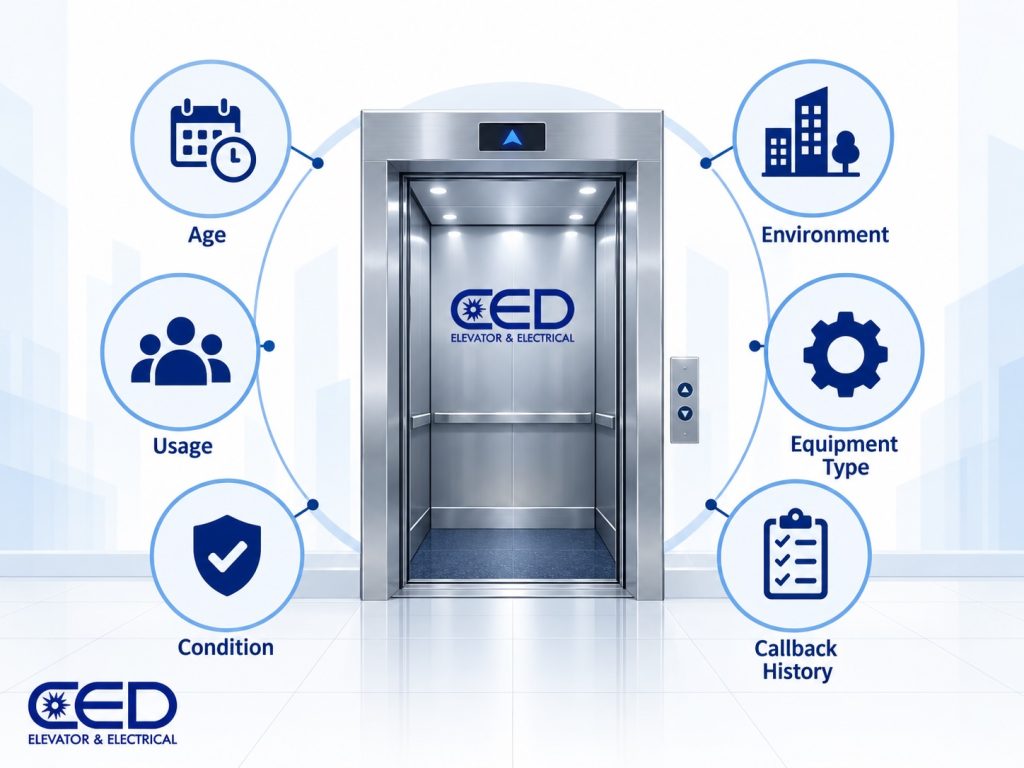
How Often Should an Elevator Be Serviced?
Elevator service frequency should reflect the condition and operating demands of the individual unit.
Some elevators may receive frequent scheduled visits because of heavy usage, aging equipment, manufacturer requirements, or service-contract terms. Others may follow a different interval based on their Maintenance Control Program, or MCP.
ASME A17.1 uses an equipment-specific maintenance framework rather than establishing one universal monthly service rule for every elevator in the United States.
Owners should also remember that local jurisdictions may enforce different adopted editions of the elevator code.
What Determines Elevator Maintenance Frequency?
Several factors influence how often preventive elevator maintenance should occur.
1. Equipment Age
Older elevators may have accumulated wear, aging controls, worn door equipment, deteriorating seals, older wiring, or components that are becoming harder to source.
Age alone does not mean an elevator is unsafe. It can, however, increase maintenance demands and parts-planning needs.
2. Elevator Usage
Higher usage generally means more operating cycles.
Frequent operation can increase wear on door rollers, operators, interlocks, relays, brakes, buttons, fixtures, traveling cable, and other mechanical or electrical components.
A heavily used commercial elevator may therefore require different attention than a lightly used unit.
3. Equipment Condition
Two elevators of the same age can behave very differently.
Maintenance planning should consider callback history, door failures, oil leaks, leveling problems, unusual noise, vibration, electrical faults, and repeated component replacement.
Patterns matter more than one isolated issue.
4. Elevator Type
Hydraulic and traction elevators contain different systems.
Hydraulic maintenance may involve the pump, motor, hydraulic fluid, valves, seals, packings, and starter equipment.
Traction systems introduce components such as suspension means, sheaves, machines, brakes, drives, and encoders.
The elevator type helps determine what must be examined and maintained.
5. Operating Environment
Heat, moisture, dust, coastal air, parking structures, industrial environments, and temperature swings can all affect components differently.
Environmental conditions are another reason elevator maintenance frequency should be equipment-specific.
6. Manufacturer and MCP Requirements
Manufacturer guidance and the elevator’s MCP should help define required procedures and intervals.
Maintenance may include examinations, cleaning, lubrication, adjustment, repair, replacement, and testing according to the needs of the unit rather than an arbitrary calendar.
What Is an Elevator Maintenance Control Program?
A Maintenance Control Program is the documented maintenance framework for an elevator or escalator.
An MCP should identify items such as:
- Maintenance tasks
- Procedures
- Scheduled intervals
- Required examinations
- Required testing
- Equipment-specific requirements
- Maintenance records
The important point is that an MCP should reflect the actual equipment.
A generic checklist copied from another elevator may not properly address differences in age, technology, usage, or condition.
Elevator Maintenance vs. Elevator Inspection
Maintenance and regulatory inspection are not the same thing.
| Activity | Main Purpose |
|---|---|
| Preventive maintenance | Keep equipment operating correctly and address wear |
| Repair | Correct a failed or defective component |
| Inspection | Evaluate equipment against applicable requirements |
| Testing | Verify required safety and operating functions |
| Modernization | Upgrade aging or obsolete systems |
An elevator can undergo required inspections while also receiving routine preventive maintenance between inspections.
Inspection and testing requirements depend on the applicable jurisdiction and adopted code. Owners should verify local requirements with the Authority Having Jurisdiction.
Does a High-Traffic Elevator Need More Frequent Maintenance?
Potentially, yes.
High traffic increases operating cycles on doors, rollers, operators, contacts, relays, brakes, buttons, fixtures, and other components.
Rather than using an arbitrary trips-per-day threshold, maintenance frequency should respond to actual usage and observed wear.
A busy elevator showing recurring door issues may justify closer attention than a comparable unit operating only a few times each day.
Do Older Elevators Need More Frequent Service?
Older equipment may need closer maintenance when reliability begins changing.
Watch for:
- Increasing door callbacks
- Obsolete controls
- Repeated relay failures
- Hydraulic leakage
- Leveling problems
- Aging wiring
- Traveling cable wear
- Longer parts lead times
This is where parts availability becomes an important part of maintenance planning.
CED supplies elevator maintenance and repair parts for service, repair, and preventive maintenance needs, including door components, electrical supplies, packings, batteries, starters, contactors, fuses, and other replacement items.
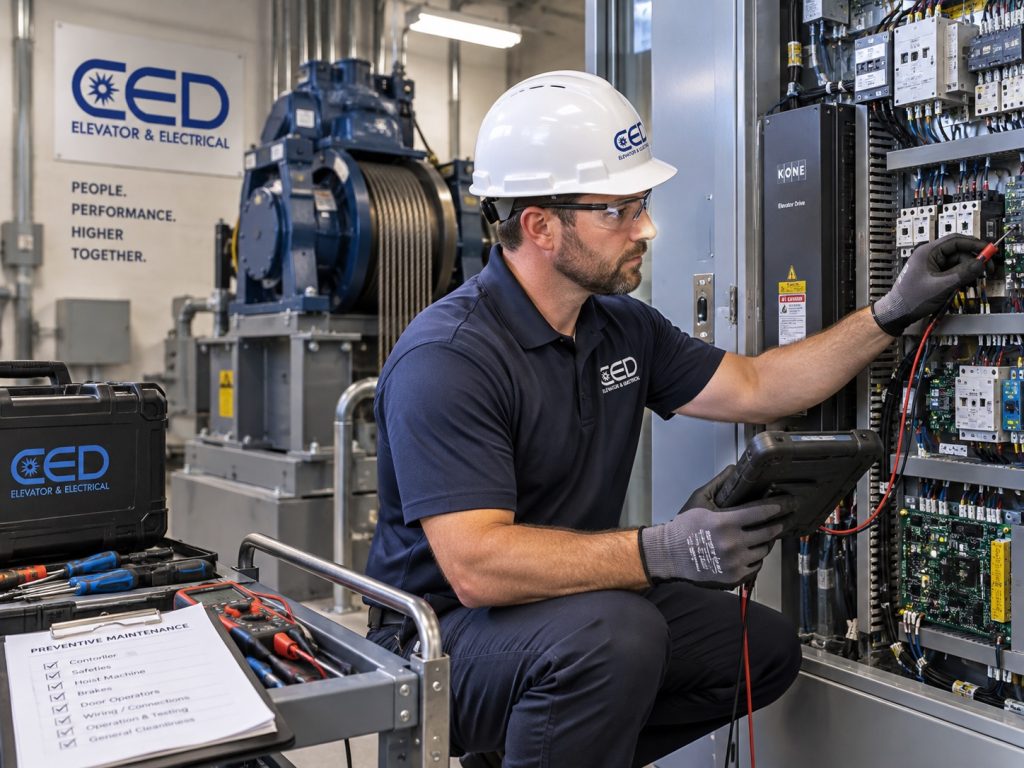
What Should Be Checked During Routine Elevator Service?
The exact service scope depends on the elevator, but routine preventive maintenance can involve several systems.
Door equipment: rollers, hangers, tracks, door operators, interlocks, and protection devices.
Controller and electrical equipment: relays, contactors, connections, fuses, batteries, and fault history.
Hydraulic equipment: oil condition, leaks, pump, motor, valve, seals, and packing.
Traction equipment: brakes, suspension components, sheaves, drives, and positioning equipment.
Cab and fixtures: buttons, indicators, lighting, and emergency communication equipment.
The purpose is to identify wear before it creates an unexpected shutdown.
Warning Signs the Current Maintenance Schedule May Not Be Enough
One callback does not automatically mean the maintenance program is inadequate.
Patterns deserve more attention.
Warning signs can include repeated door failures, uneven floor leveling, jerky starts or stops, new vibration, abnormal noise, hydraulic leaks, controller overheating, frequent breaker trips, recurring relay failures, communication problems, and extended downtime.
Increasing replacement-part frequency can also indicate that the equipment needs closer lifecycle planning.
How Maintenance Frequency Affects Parts Planning
Preventive maintenance is not only about technician visits.
A strong maintenance program can help identify worn components before they cause extended downtime.
Teams may discover door parts approaching replacement, batteries losing capacity, hydraulic seals deteriorating, relays becoming unreliable, cable showing wear, or obsolete components that require alternate sourcing.
Sourcing those components before failure can reduce emergency orders and shorten outages.
CED supports contractors with service and repair parts, alternate sourcing, inventory assistance, and parts for multiple elevator manufacturers.
Maintenance Frequency Should Be Written Into the Service Contract
A maintenance agreement should clearly define expectations.
Important items include scheduled visits, scope of work, parts coverage, testing support, emergency callbacks, response expectations, records, exclusions, overtime terms, and obsolete-parts strategies.
Clear contract language helps building owners understand what preventive service is actually being provided rather than assuming every maintenance agreement includes the same work.
When Frequent Repairs Become a Modernization Question
Preventive maintenance cannot indefinitely solve obsolete controls, unsupported door equipment, chronic leveling problems, aging wiring, recurring hydraulic issues, or widespread parts obsolescence.
At some point, repeated failures may shift the discussion toward targeted modernization.
The decision should be based on equipment condition, reliability, lifecycle cost, and parts availability rather than age alone.
Build the Schedule Around the Elevator, Not a Generic Calendar
The correct elevator maintenance schedule depends on the equipment actually operating in the building.
Age, usage, condition, environment, technology, manufacturer recommendations, callback history, the MCP, and applicable code requirements should all influence service frequency.
A documented preventive maintenance program also gives contractors an opportunity to identify replacement components before a worn part becomes an emergency order.
CED Elevator & Electrical supports elevator contractors and maintenance teams nationwide with service and repair parts, alternate sourcing, inventory support, modernization materials, and regional distribution.
Frequently Asked Questions
How often should an elevator be serviced?
There is no universal interval. Maintenance frequency should reflect equipment age, design, usage, condition, environment, manufacturer guidance, the MCP, and jurisdictional requirements.
Do elevators need monthly maintenance?
Some elevators or service contracts may call for monthly visits, while others may follow a different schedule. The interval should come from the equipment-specific maintenance program and applicable requirements.
Do older elevators need more maintenance?
They may. Accumulated wear, obsolete components, increasing callbacks, and declining reliability can justify closer maintenance attention.
Is elevator maintenance the same as an inspection?
No. Preventive maintenance addresses operation and wear, while inspections and required testing evaluate compliance according to applicable jurisdictional requirements.
What is an elevator Maintenance Control Program?
An MCP is the documented program identifying maintenance tasks, procedures, examinations, tests, records, and scheduled intervals for a specific elevator.