
An elevator position indicator problem occurs when the floor display shows an incorrect number, freezes, flickers, or stops working. Common causes include faulty floor sensors, encoder errors, damaged traveling cable wiring, communication failures, incorrect controller settings, and deteriorating display components. When an elevator floor display shows the wrong level, qualified technicians should verify the controller’s actual position information before replacing the indicator. The appropriate solution may involve repairing wiring, correcting floor-position feedback, or installing a compatible replacement display.
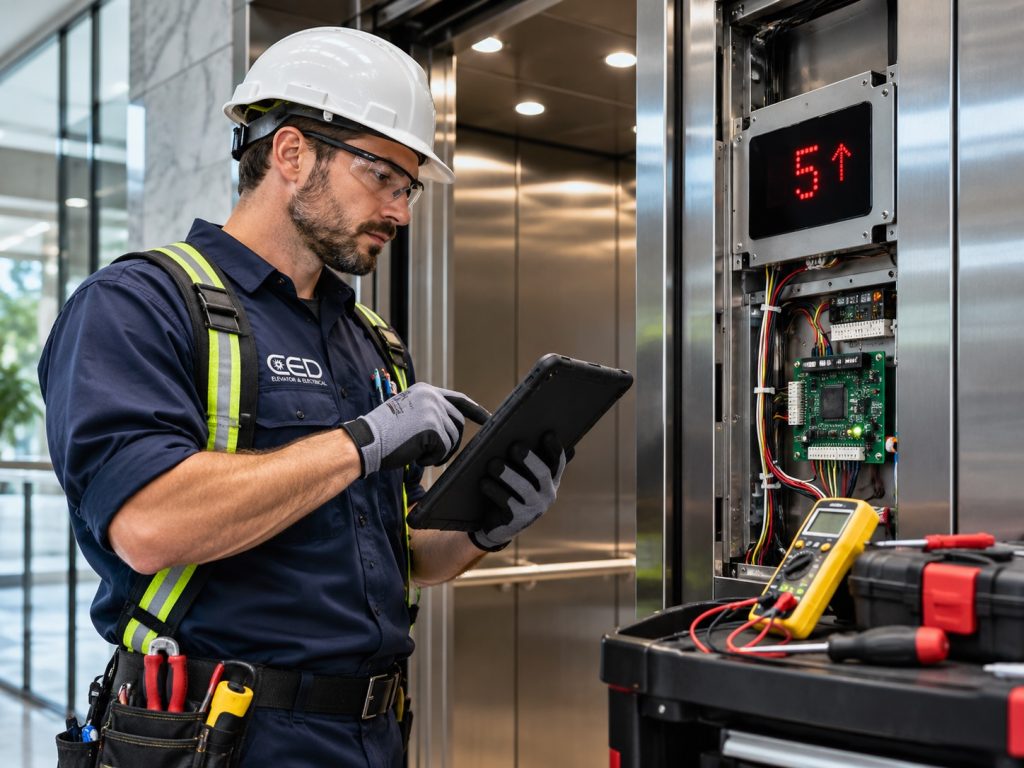
Why Does an Elevator Display the Wrong Floor?
An elevator floor indicator helps passengers identify their location as the elevator moves between building levels.
When the display becomes inaccurate, passengers may become confused, while building maintenance teams may have difficulty determining whether the problem involves the indicator or the elevator control system.
At CED Elevator & Electrical, we help elevator contractors source replacement displays, controllers, electrical components, and modernization equipment.
A malfunctioning position indicator does not always mean the display itself has failed.
The problem may originate anywhere between the elevator’s position sensors, controller, communication wiring, and display hardware.
Identifying the source helps prevent unnecessary replacement costs and repeated service calls.
7 Common Causes of Elevator Position Indicator Problems
1. Faulty Floor Position Sensors
Elevators use positioning systems to determine where the car is traveling and when it reaches a landing.
Depending on the equipment, these systems may include magnetic sensors, selector tapes, encoders, or other position-detection components.
When a sensor fails to register correctly, the controller may receive inaccurate position information.
Recommended Solution: Qualified technicians should inspect position sensors, mounting alignment, and controller diagnostic information.
2. Encoder or Selector Errors
Encoders and floor selectors help elevator controllers track car movement and position.
A defective encoder, missing position pulse, or incorrectly aligned selector component can cause the system to lose its position reference.
These problems may produce an elevator floor display that skips numbers or shows the wrong landing.
Recommended Solution: Verify encoder feedback, selector operation, and floor-position calibration according to manufacturer procedures.
3. Damaged Traveling Cable Wiring
Traveling cables carry electrical signals between the moving elevator cab and stationary equipment.
Over time, repeated movement can contribute to conductor wear or intermittent electrical connections.
When communication wiring becomes damaged, floor indicators may flicker, freeze, or lose information during travel.
Recommended Solution: Inspect relevant wiring, connectors, and traveling cable circuits for intermittent faults.
4. Elevator Controller Communication Problems
Modern elevator displays depend on accurate information from the controller.
Some systems use individual floor signals, while others rely on serial communication protocols.
Loose connections, faulty interface boards, or communication errors can interfere with floor information.
Recommended Solution: Compare the controller’s reported floor position with the information received by the display.
If the controller reports the correct floor but the indicator does not, the problem may be downstream of the controller.
5. Incorrect Floor Mapping or Programming
An elevator floor display may show incorrect information after controller replacement, software updates, or modernization work.
For example, a building may designate floors as B, G, 2, and 3 instead of using a simple numerical sequence.
Incorrect configuration can cause the display to show the wrong floor designation even when the elevator stops correctly.
Recommended Solution: Verify floor mapping, landing assignments, and communication settings against the building’s actual configuration.
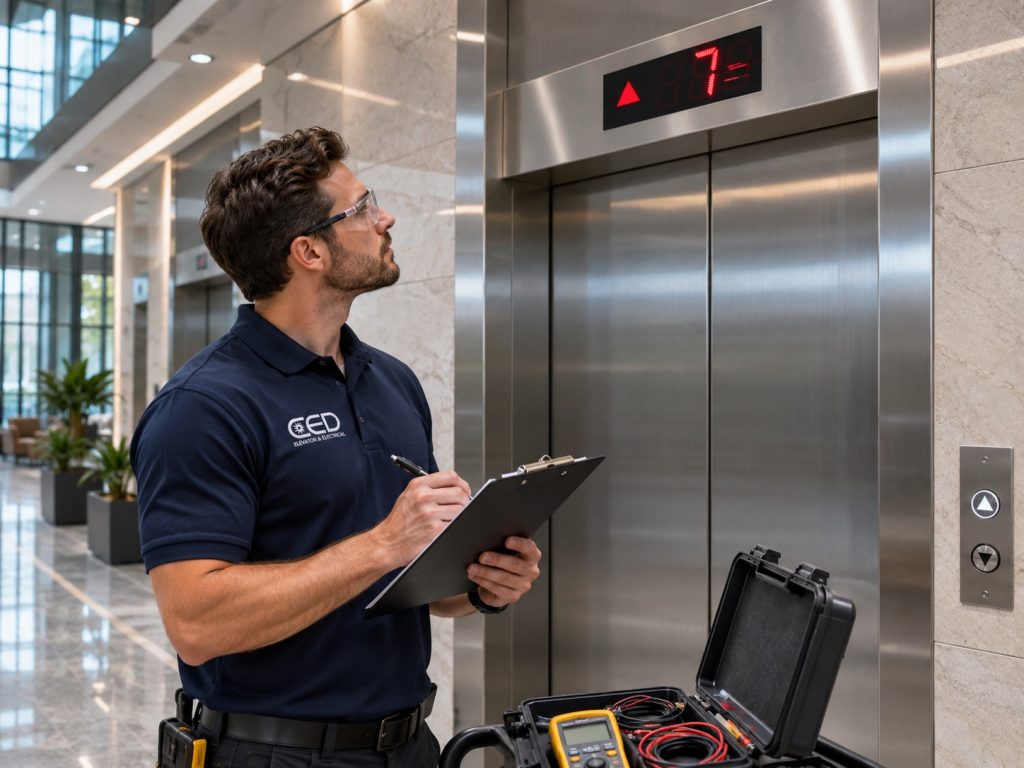
6. Failing LED or LCD Display Components
The indicator hardware itself can eventually deteriorate.
Common symptoms include:
- Missing floor number segments
- Flickering LED characters
- Dim LCD backlighting
- Blank display screens
- Characters that remain frozen
Recommended Solution: Evaluate the display module, driver board, connectors, and power supply before choosing replacement equipment.
7. Obsolete or Incompatible Display Hardware
Older elevator systems may use discontinued display modules or proprietary communication interfaces.
When replacement components become unavailable, maintaining the original indicator can become increasingly difficult.
Installing a modern display without confirming compatibility can also create communication problems.
Recommended Solution: Identify the existing controller, available signals, operating voltage, fixture dimensions, and compatible replacement options.
Elevator Floor Display Troubleshooting Chart
| Symptom | Possible Cause |
|---|---|
| Wrong floor number | Encoder, selector, or floor mapping error |
| Display freezes during travel | Communication or position feedback problem |
| Flickering floor numbers | Power supply, wiring, or display board fault |
| Missing LED segments | Failed LED module or driver |
| Blank LCD screen | Power, backlight, or controller interface problem |
| Incorrect display after modernization | Programming or compatibility issue |
These are diagnostic indicators, not confirmed faults. Qualified elevator personnel should perform electrical and controller testing.
How Technicians Diagnose Incorrect Elevator Floor Displays
We recommend following a systematic diagnostic approach rather than immediately replacing the display.
A qualified technician should:
- Compare the actual landing with the displayed floor number.
- Check the controller’s reported position and fault history.
- Verify relevant encoder and selector feedback.
- Inspect display power and communication connections.
- Confirm floor mapping and controller configuration.
- Test display operation according to manufacturer procedures.
Important: If the elevator is stopping at an incorrect landing or displaying other position-related safety faults, it should be removed from service pending professional evaluation.
Never bypass safety circuits or modify controller settings without proper authorization and procedures.
When Should an Elevator Indicator Be Replaced?
Not every indicator malfunction requires a complete modernization project.
Individual repairs may resolve problems involving connections, power supplies, or replaceable display components.
However, elevator indicator replacement may be appropriate when existing components are obsolete, display failures recur, or compatible replacement boards are no longer available.
At CED Elevator & Electrical, our elevator modernization products help contractors coordinate compatible controllers, cab fixtures, electrical equipment, and other modernization materials.
Are Elevator Floor Indicators Required by ADA Standards?
Yes. Applicable ADA elevator accessibility requirements address visible and audible car position indicators.
According to the U.S. Access Board’s Elevator Accessibility Guide, standard car position indicators generally require:
- Visible floor characters at least ½ inch high
- Display placement above the door or car operating panel
- Appropriate floor identification as the elevator passes or stops at served floors
- Audible announcements or permitted alternative signals
Specific requirements and exceptions depend on elevator configuration and applicable standards.
Replacing a display does not automatically establish compliance with every accessibility or elevator safety requirement.
For additional equipment guidance, read our related article, Elevator Position Indicators: LCD vs. LED vs. Legacy Displays.
Frequently Asked Questions
Why does my elevator show the wrong floor number?
Incorrect floor information may result from faulty position sensors, encoder errors, controller programming, communication failures, or a defective display.
Can an elevator floor display be repaired?
Yes. Some problems can be corrected through wiring repairs, component replacement, or configuration adjustments. Obsolete systems may require updated hardware.
Does replacing an elevator indicator require a new controller?
Not always. Some modern displays can operate with existing controllers when compatible communication interfaces are available.
Why does an elevator indicator freeze between floors?
A frozen display may indicate interrupted communication, incorrect position feedback, a failing display module, or a controller problem.
Are elevator position indicators required by code?
Applicable accessibility and elevator safety standards contain requirements for floor indicators and passenger signaling. Requirements depend on the elevator and jurisdiction.
Find Elevator Indicator Replacement Parts at CED Elevator & Electrical
Elevator position indicator problems can affect passenger confidence, accessibility, and maintenance reliability.
At CED Elevator & Electrical, we help elevator contractors source compatible replacement indicators, electrical components, controllers, and modernization equipment.
Whether you’re troubleshooting incorrect floor information, replacing a damaged display, or coordinating a larger elevator upgrade, we can help identify suitable components.