
As commercial buildings age, elevator systems often become one of the most expensive and frustrating components to maintain. Slow performance, rising repair costs, outdated controls, and tenant complaints can all signal that your elevator system is no longer meeting the needs of your building.
When these issues begin to impact reliability, building owners are usually faced with a major decision: should you invest in elevator modernization or plan for a full replacement?
The right answer depends on your building’s age, the condition of the equipment, your budget, and your long-term goals. In many cases, elevator modernization offers a cost-effective path to improved performance without the expense of replacing the entire system.
At CED Elevator & Electrical, we help building owners evaluate elevator performance, compare upgrade options, and make informed decisions that improve reliability, reduce tenant complaints, and protect long-term building value.
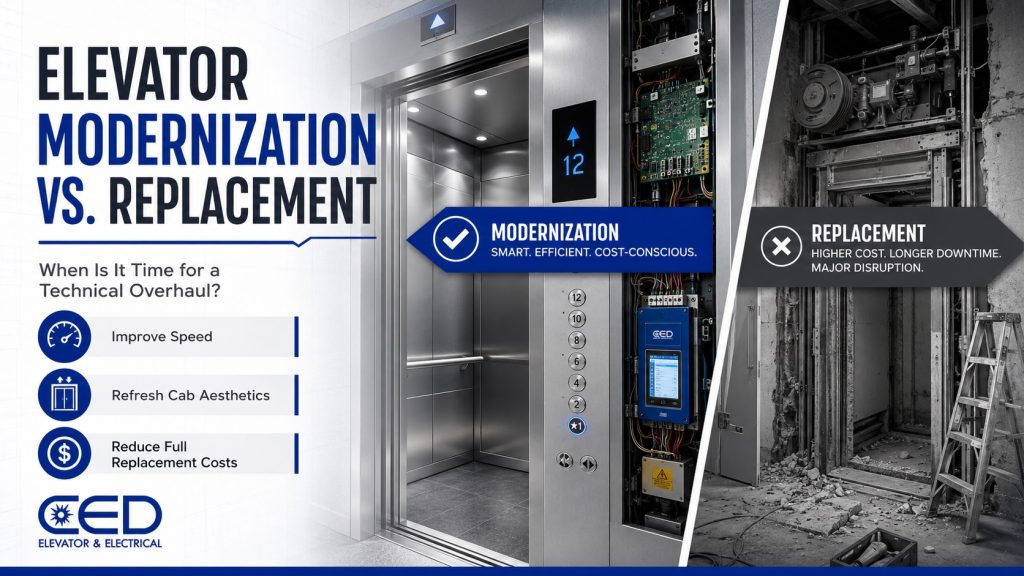
Understanding the Difference Between Modernization and Replacement
Before deciding which option is best, it is important to understand what each service involves.
Elevator Modernization
Elevator modernization upgrades key mechanical and electrical components while keeping the main structural framework of the elevator system intact.
This may include:
- New controllers
- Updated door operators
- Improved fixtures
- Energy-efficient motors
- Safety upgrades
Modernization improves performance while avoiding the cost of replacing the full elevator system.
Full Elevator Replacement
A full replacement involves removing the entire elevator system and installing new equipment from the ground up.
This typically includes:
- Hoist machinery
- Cab systems
- Rails
- Controls
- Electrical systems
Replacement is more extensive and often significantly more expensive.
At CED Elevator & Electrical, we help clients determine which option delivers the best return for their building and budget.
When Elevator Modernization Makes Sense
For many commercial properties, elevator modernization is the most practical option when the core system remains structurally sound.
Modernization is often ideal when:
- The elevator is outdated but operational
- Repair costs are increasing
- Tenants are experiencing delays
- Parts are becoming harder to source
- Energy use is too high
Instead of replacing the full system, targeted elevator upgrades can improve performance while preserving much of the existing infrastructure.
This approach often restores reliability at a fraction of the elevator replacement cost.
The ROI of Elevator Modernization
One of the biggest reasons property owners choose modernization is the return on investment.
Upgrading key components improves:
- Ride quality
- Speed
- Reliability
- Energy efficiency
- Tenant satisfaction
These improvements can reduce complaints, lower maintenance costs, and extend the life of the system.
Modernized elevators also use newer technology that improves operating efficiency, reducing energy consumption over time.
For many buildings, elevator modernization provides measurable ROI without the disruption and expense of full replacement.
Reduced Tenant Complaints Improve Building Performance
Outdated elevators affect more than operations. They impact tenant satisfaction.
Common complaints include:
- Slow response times
- Rough rides
- Frequent outages
- Noisy operation
- Poor reliability
These issues create frustration for tenants, visitors, and staff.
Modernization helps reduce complaints by improving system responsiveness and ride quality, creating a better user experience throughout the building.
For commercial properties, fewer elevator issues improve tenant retention and enhance the building’s reputation.
Energy Efficiency Is a Major Advantage
Older elevator systems are often less energy efficient than modern equipment.
A modernization project can improve efficiency by upgrading:
- Motors
- Controllers
- Lighting
- Door systems
These improvements reduce energy use while improving performance.
Lower utility costs help offset modernization expenses and contribute to long-term savings.
For buildings focused on operating efficiency in 2026, elevator modernization can provide immediate and ongoing financial benefits.
When Full Replacement Is the Better Option
While modernization offers strong ROI, some systems are beyond practical repair.
A full replacement may be the best choice when:
- The system has major structural wear
- Parts are obsolete
- Performance issues are severe
- Safety standards require major redesign
- Repeated failures are common
In these cases, continued repairs may become more expensive than investing in a new system.
Although elevator replacement cost is higher upfront, replacement can be the best long-term investment when the system has reached the end of its useful life.
Comparing Costs: Modernization vs. Replacement
Budget is often the deciding factor.
In general:
- Elevator modernization costs less upfront
- Full replacement requires a larger capital investment
- Modernization has shorter downtime
- Replacement provides a completely new system
While elevator replacement cost is higher, it may be justified for severely outdated systems.
However, if the elevator’s structural components are still viable, modernization often delivers the best value with lower disruption.
When comparing options, the total cost of ownership matters more than upfront price alone.
Maintenance Costs After Modernization
One of the major benefits of modernization is the reduction in future service issues.
Upgraded systems typically require:
- Fewer emergency repairs
- Less downtime
- Easier parts sourcing
- More predictable maintenance
This reduces the burden of ongoing commercial elevator maintenance while improving reliability.
At CED Elevator & Electrical, we help building owners pair modernization projects with proactive commercial elevator maintenance plans to maximize long-term system performance.
How to Choose the Right Option for Your Building
Every building is different, and the best choice depends on:
- Equipment age
- Current performance
- Maintenance history
- Budget goals
- Tenant expectations
A professional assessment can determine whether elevator modernization will restore performance or whether replacement is the better investment.
Making the right decision now helps avoid unnecessary expenses while improving building operations.
At CED Elevator & Electrical, we provide expert evaluations that help owners choose the most cost-effective path forward.
Improve Elevator Performance with CED Elevator & Electrical
If your building’s elevator system is causing rising maintenance costs, energy waste, or tenant complaints, now is the time to evaluate your options.
In many cases, elevator modernization delivers the best return by improving performance, lowering costs, and extending equipment life without the high elevator replacement cost of a full system replacement.
At CED Elevator & Electrical, we help building owners plan smart elevator upgrades that improve reliability, energy efficiency, and tenant satisfaction.
Visit CED Elevator & Electrical today to schedule an elevator assessment and find out whether modernization or replacement is the right investment for your building in 2026.