
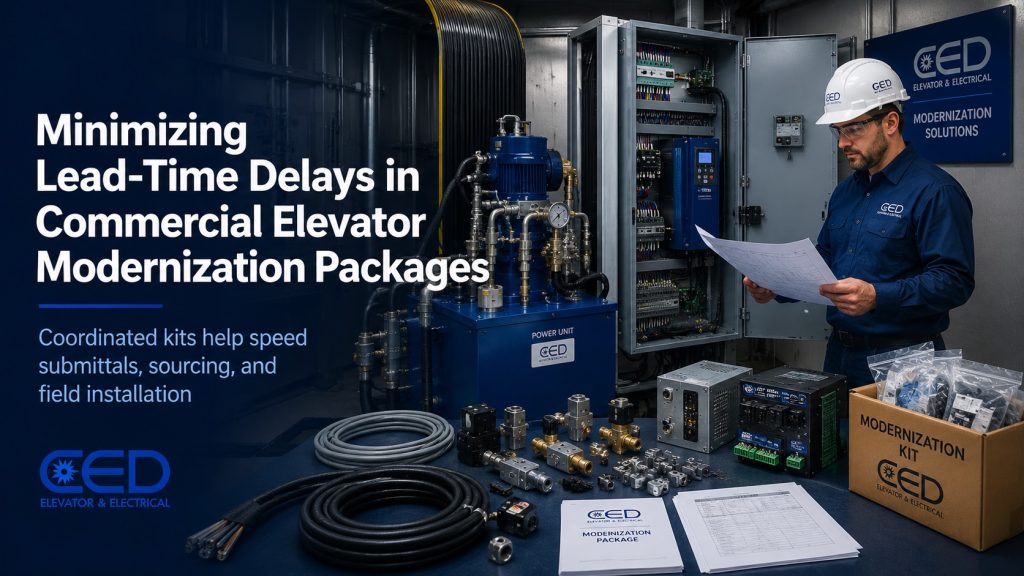
Commercial elevator modernization packages reduce lead-time delays when major components are sourced together instead of ordered as separate, disconnected parts. A coordinated package may include the hydraulic power unit, valves, fittings, controller components, traveling cable, fixtures, operators, and related electrical materials. This helps contractors simplify engineering submittals, reduce compatibility problems, and keep field installation on schedule.
Why Elevator Modernization Jobs Stall
Most elevator modernization delays do not happen during the visible field work. They happen before mechanics can begin.
The common bottlenecks are engineering submittals, unclear part compatibility, missing controller details, shipping gaps, and last-minute changes between the power unit, valve package, controller, fixtures, wiring, and door equipment. When each component is ordered separately, the project can become a chain of small delays.
At CED Elevator & Electrical, our team helps elevator professionals source modernization materials in a more coordinated way so the field crew can spend less time waiting and more time installing.
The Problem With Piecemeal Ordering
Commercial elevator upgrade parts need to work as a system. A hydraulic power unit replacement is not just a tank, pump, and motor. It must coordinate with valve requirements, oil conditions, fittings, piping, electrical feeds, starter needs, control logic, travel demand, machine room layout, and inspection expectations.
When the controller, fixtures, wiring, and hydraulic equipment are sourced from multiple disconnected channels, problems can show up late:
- Submittals do not match field conditions
- Controller details conflict with selected equipment
- Fittings or line components are missing
- Fixture packages arrive before wiring decisions are final
- Power unit options do not match building needs
- Mechanics lose time solving supply issues on-site
A modernization project is already disruptive for building owners. Better coordination helps reduce downtime risk before the elevator is taken out of service.
What Makes a Coordinated Modernization Package Faster?
A coordinated package gives the contractor a clearer path from approval to installation. Instead of chasing components one by one, the project team can align key assemblies earlier.
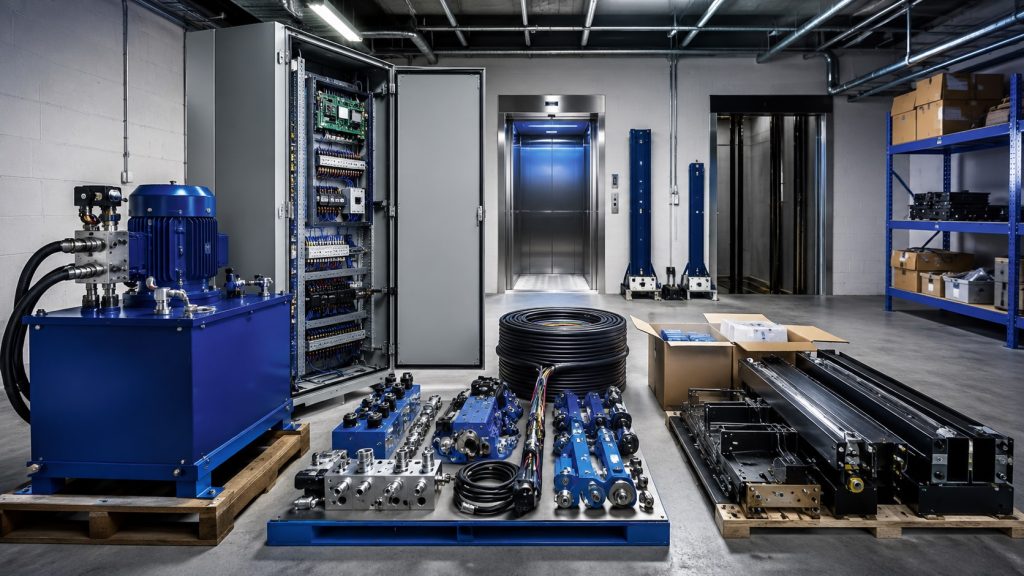
CED supports elevator modernization packages with materials such as hoistway cable, traveling cable, wire rope, duct, hydraulic fittings, SmartRise controllers, GAL Canada linear door operators, and ECC hall and cab fixtures.
That matters because each category affects another. Controller components influence wiring requirements. Fixture choices affect signal wiring and submittals. Hydraulic power unit options affect machine room layout, noise, heat, oil monitoring, and service access.
Matching Hydraulic Power Units With the System
A hydraulic power unit replacement should be selected for the building’s real operating demands, not simply matched to the old equipment nameplate.
Modernization planning should account for:
| Component Area | Why Coordination Matters |
|---|---|
| Pump and motor | Supports proper performance and travel demand |
| Valve package | Affects leveling, ride quality, and adjustment |
| Tank features | Impacts maintenance access and machine room fit |
| Gauges and switches | Helps field teams monitor oil and performance |
| Fittings and lines | Reduces installation delays and compatibility issues |
| Controller interface | Keeps electrical and hydraulic behavior aligned |
| Optional cooling | Helps manage heat in busy commercial properties |
When the unit, valves, fittings, and elevator controller components are planned together, field installation becomes more predictable.
Reducing Submittal Revisions
Submittals are a major source of lead-time delays. Every incomplete detail can trigger another round of review. A better modernization package should make it easier to confirm the equipment, layout, power requirements, control strategy, fixtures, cab signals, and job-specific options.
This is where early coordination with a knowledgeable elevator parts supplier helps. The more complete the material plan is before approval, the less likely the project is to stall because a required part was never specified.
Field-Ready Parts Keep Mechanics Working
Commercial elevator modernization often happens in occupied buildings such as offices, medical properties, schools, retail centers, multifamily buildings, and municipal facilities. Every delay affects tenants, property managers, service teams, and inspection schedules.
CED’s service and repair parts support helps contractors source materials for active jobs, emergency repairs, and modernization work through a broad warehouse network. For Northeast contractors, the South Windsor, CT elevator parts location supports regional modernization needs with access to elevator parts, power units, scavenger pumps, traveling cable, wire rope, and related products.
Planning Checklist Before Ordering
Before placing a modernization package order, confirm:
- Existing elevator type, capacity, rise, speed, and travel conditions
- Controller requirements and interface details
- Hydraulic power unit sizing and optional features
- Valve, fitting, line, and piping needs
- Traveling cable and hoistway cable requirements
- Fixture package, hall station, and cab signal needs
- Door operator compatibility
- Machine room access and layout constraints
- Required submittal documents
- Shipping sequence and jobsite delivery timing
This planning step helps prevent the most expensive kind of delay: a mechanic on-site with an incomplete package.
Work With CED Elevator & Electrical
CED Elevator & Electrical helps elevator professionals source modernization materials, hydraulic power units, controller components, fixtures, cable, fittings, and repair parts with a focus on jobsite readiness.
For contractors planning commercial elevator modernization packages, the best lead-time strategy is coordination before installation begins. Match the major components early, simplify the submittal path, and keep mechanics moving with parts that are ready for the field.