
Elevator compliance can feel overwhelming, especially when safety codes, accessibility rules, communication technology, inspections, and permit renewals all overlap.
For 2026, the most important step is simple: do not wait for a failed inspection to find out your elevator is behind.
The ASME A17.1/CSA B44 Safety Code is widely recognized across North America for elevator design, installation, operation, inspection, testing, maintenance, alteration, and repair. ASME A17.1-2025 has been published, and local adoption timelines may vary by jurisdiction. Building owners should always confirm which code edition is enforced in their state, county, or city.
At CED Elevator & Electrical, building teams can source elevator parts, modernization packages, service materials, controllers, cables, fixtures, wire rope, power units, and repair components that support safe and compliant operation.
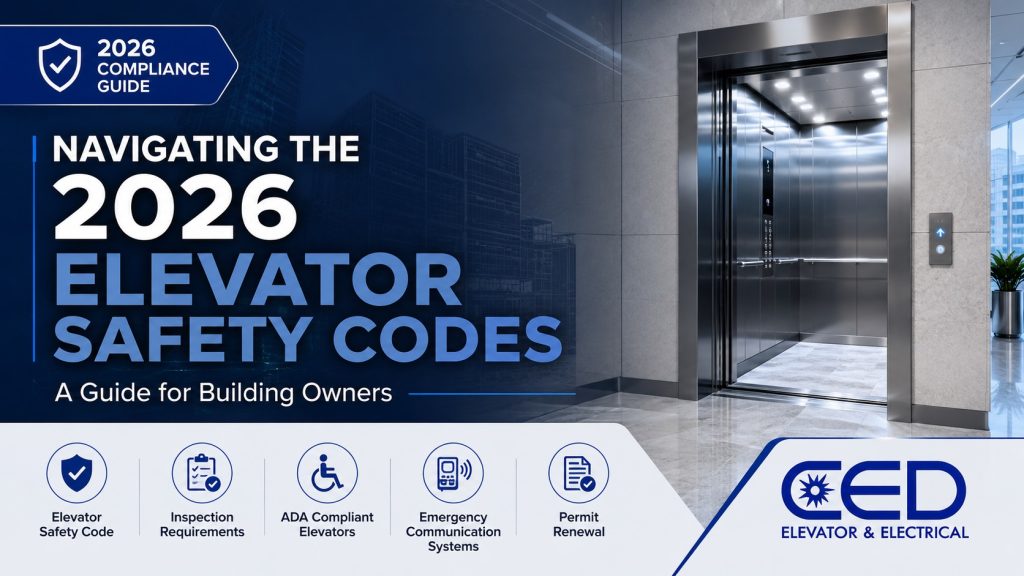
Why Elevator Safety Code Compliance Matters
Elevator code compliance is not just a paperwork issue. It affects passenger safety, tenant trust, liability, building access, and operating continuity.
A missed inspection, expired permit, failed emergency phone, outdated controller, or non-compliant cab feature can create avoidable risk. For commercial buildings, hospitals, schools, multifamily properties, offices, and public facilities, elevators are part of daily life.
A good compliance plan protects:
- Passenger safety
- ADA accessibility
- Emergency response
- Inspection readiness
- Permit renewal timelines
- Tenant confidence
- Long-term equipment performance
1. Know Your Local Elevator Inspection Requirements
Elevator inspection requirements are enforced locally. Your building may need annual inspections, periodic testing, correction reports, permit renewals, and documentation for maintenance or alterations.
Before 2026, building owners should ask:
- When is the next required elevator inspection?
- Is the elevator permit current?
- Are past violations fully corrected?
- Is testing documentation complete?
- Are maintenance records easy to access?
- Are replacement parts available if repairs are needed?
CED’s Service and Repair division stocks parts from more than 100 manufacturers and supports repair needs for down elevators, including electrical, GAL replacement parts, batteries, fans, coolers, and Texacone packing.
2. Review ADA Compliant Elevator Features
ADA compliant elevators must be usable by people with disabilities. The 2010 ADA Standards set minimum accessibility requirements for newly constructed or altered public accommodations, commercial facilities, and state and local government facilities.
Building owners should review:
- Button height and reach range
- Braille and tactile markings
- Visual and audible signals
- Hall and cab fixtures
- Door timing
- Clear floor space
- Emergency controls
- Communication accessibility
If your elevator cab or fixtures are outdated, modernization may be a better solution than full replacement. CED’s Modernization offerings include hoistway and traveling cable, wire rope, hydraulic fittings, SmartRise Controllers, GAL Canada Linear Door Operators, and ECC hall and cab fixtures.
3. Upgrade Emergency Communication Systems
Emergency communication systems are a major compliance focus. The U.S. Access Board notes that ASME A17.1 requires a two-way means of emergency communication in elevator cars.
Newer code discussions also focus on communication access for passengers who are deaf, hard of hearing, or speech impaired. NEII explains that IBC requirements address elevator emergency communication systems for deaf, hard of hearing, and speech impaired passengers, while ASME A17.1 technical provisions help guide consistent application.
Building owners should check whether the elevator communication system:
- Connects reliably to authorized personnel
- Works during power or phone system changes
- Supports required voice, visual, or text communication
- Is tested and documented
- Matches the code edition enforced locally
4. Do Not Ignore Elevator Permit Renewal
Elevator permit renewal is often where compliance problems surface. If records are missing, inspections are overdue, or violations remain unresolved, renewal can become stressful.
Create a simple compliance file that includes:
- Current elevator permit
- Inspection reports
- Test records
- Maintenance Control Program documents
- Violation corrections
- Modernization records
- Emergency phone test logs
- Component replacement records
This makes inspections easier and gives owners peace of mind.
5. Use Modernization to Close Compliance Gaps
Not every compliance issue requires a full elevator replacement. Many buildings can improve safety, performance, accessibility, and reliability with targeted commercial elevator upgrades.
Modernization may include:
- Controller upgrades
- Door operator replacement
- Cab fixture updates
- Emergency communication upgrades
- Traveling cable replacement
- Wire rope replacement
- Hydraulic power unit components
- Lighting and cab interior improvements
CED has supplied elevator modernization materials for more than 25 years and provides parts for modernization, construction, OEM, service, and repair needs.
GEO Section: CED Support Across U.S. Markets
CED Elevator & Electrical supports elevator professionals through locations in South Windsor, CT, Columbia, MD, Long Beach, CA, Arlington, TX, and Chicago, IL. This gives building owners, contractors, and service teams access to regional support across the Eastern, Mid-Atlantic, Western, Southern, and Midwestern U.S. markets.
For code-related upgrades, parts sourcing, modernization planning, or repair support, visit Elevator Products, Modernization, Service and Repair, Services, or Contact CED.
Safety Codes FAQs
What elevator safety code should building owners know for 2026?
Building owners should understand ASME A17.1/CSA B44 and confirm which edition their local jurisdiction enforces.
How often do elevators need inspections?
Inspection schedules vary by state and local authority. Owners should check local elevator inspection requirements and keep permits, reports, and testing records current.
What makes an elevator ADA compliant?
ADA compliant elevators include accessible controls, tactile and braille markings, visual and audible signals, proper door timing, and emergency communication access.
Can modernization help with compliance?
Yes. Controller upgrades, fixtures, emergency communication systems, door operators, cables, and cab improvements can help address safety, accessibility, and performance gaps.