
The clearest signs an elevator needs modernization include frequent breakdowns, obsolete controllers, unavailable replacement parts, recurring door failures, inaccurate floor leveling, and rising repair expenses. While individual problems may be resolved through maintenance, repeated failures across multiple components often indicate that modernization offers better long-term reliability. Replacing outdated controllers, door operators, wiring, and other equipment can improve performance without necessarily replacing the entire elevator.
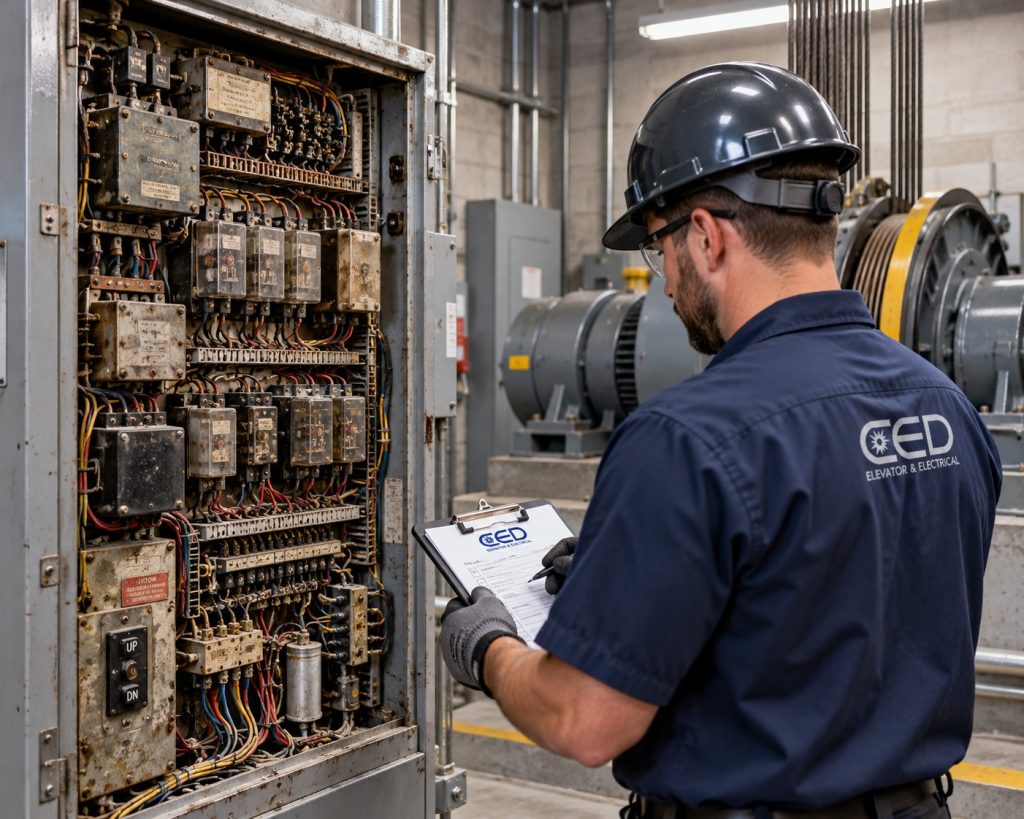
When Does Elevator Repair Stop Making Sense?
Elevators are designed for years of dependable operation, but even well-maintained systems eventually develop aging components and performance limitations.
At CED Elevator & Electrical, we help elevator contractors source repair parts, replacement components, and modernization equipment for hydraulic and traction elevators.
A single breakdown does not automatically mean an elevator needs modernization.
However, when service calls become frequent, replacement parts are difficult to obtain, and repairs no longer restore dependable operation, it may be time to reconsider the long-term maintenance strategy.
Recognizing these elevator modernization signs early helps building owners plan equipment upgrades before unexpected failures create extended downtime.
10 Signs Your Elevator Needs Modernization
1. Frequent Breakdowns and Service Calls
An occasional elevator malfunction may require a straightforward repair.
However, repeated shutdowns or service calls involving the same components can indicate deeper equipment problems.
When contractors repeatedly replace relays, contacts, switches, or control components without restoring consistent reliability, a broader system evaluation may be necessary.
2. Obsolete Elevator Controllers
Older elevator controllers may rely on outdated relay logic, discontinued circuit boards, or proprietary components.
As equipment ages, finding replacement parts and technical support can become increasingly difficult.
Modern controllers offer improved diagnostic capabilities, more flexible system integration, and updated control technology.
At CED, we supply modernization components, including SmartRise controllers and compatible electrical equipment.
3. Replacement Parts Are Becoming Difficult to Find
One of the strongest indicators that an elevator needs modernization is declining parts availability.
Manufacturers eventually discontinue older components, creating challenges when critical equipment fails.
Common issues include:
- Discontinued control boards
- Obsolete door operator components
- Limited technical documentation
- Increasing replacement lead times
- Dependence on refurbished parts
We recommend evaluating available modernization options before a critical component becomes completely unavailable.
4. Elevator Doors Keep Malfunctioning
Elevator doors experience frequent mechanical movement and can become a recurring maintenance concern.
Common problems include delayed opening, repeated reopening, intermittent operation, and worn door equipment.
When adjustments and replacement parts no longer provide reliable performance, upgrading the door operator may be appropriate.
Qualified technicians should promptly investigate any suspected door interlock or safety-related malfunction.
5. The Elevator Does Not Level Correctly
An elevator should stop with its floor reasonably aligned with the building landing.
Repeated leveling problems may indicate issues involving sensors, controls, drives, or hydraulic components.
Significant misleveling can create tripping hazards for passengers.
We recommend immediate professional evaluation rather than continuing normal operation with an unresolved safety concern.
6. Unusual Noise, Vibration, or Rough Movement
Older elevators may develop abnormal vibration, excessive mechanical noise, or inconsistent acceleration.
Potential causes include deteriorating machinery, drive problems, worn components, or control system deficiencies.
These symptoms do not always require modernization.
However, when multiple mechanical and electrical problems occur together, replacing isolated parts may no longer be the most practical approach.
7. Elevator Performance Is Getting Slower
Long passenger waiting times, inconsistent response, and prolonged door cycles can indicate declining elevator performance.
Outdated controllers and door equipment may contribute to inefficient operation.
Modern control systems can improve dispatching, door operation, and system response when properly selected and integrated.
Actual performance improvements depend on the building, elevator configuration, and modernization scope.
8. Hydraulic or Mechanical Components Require Repeated Repairs
Hydraulic elevators may experience recurring valve problems, deteriorating seals, fluid leakage, or power unit failures.
Traction elevators can develop problems involving motors, drives, ropes, or other mechanical equipment.
When several major components approach the end of their serviceable life, contractors should evaluate whether targeted modernization or a more extensive upgrade is justified.
9. Safety, Accessibility, or Communication Systems Are Outdated
Older elevators may require updates involving emergency communication, safety monitoring, door protection, or accessible passenger fixtures.
The ASME A17.1 Safety Code for Elevators and Escalators addresses elevator installation, alteration, inspection, maintenance, and repair.
Actual requirements depend on locally adopted regulations, equipment configuration, and the scope of work.
We recommend reviewing inspection findings and applicable requirements with qualified elevator professionals.
10. Repair Costs Continue Increasing
Frequent repairs can become expensive when equipment experiences repeated failures.
Building owners should compare:
- Annual repair expenses
- Frequency of unscheduled service calls
- Total elevator downtime
- Replacement part availability
- Expected remaining equipment life
- Estimated modernization investment
If repair spending continues rising without improving reliability, modernization may provide better long-term value.
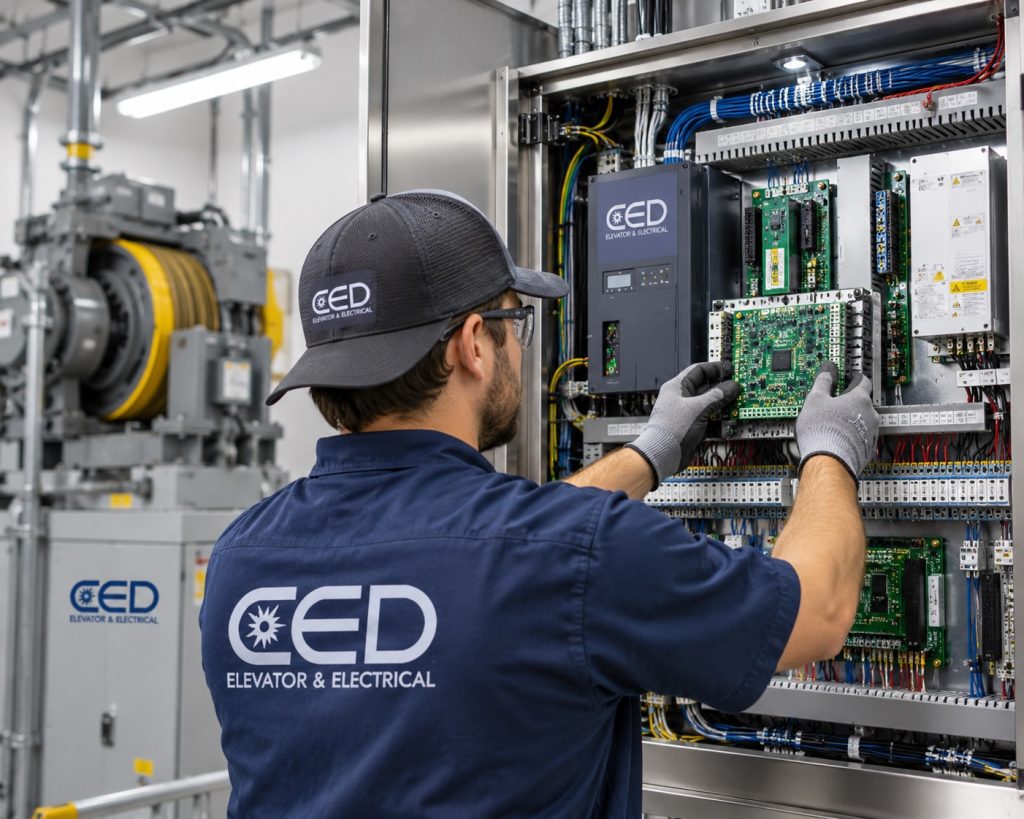
Elevator Repair vs. Modernization: Which Is Better?
Not every old elevator requires a complete upgrade.
The correct decision depends on equipment condition, safety requirements, and the cost of maintaining existing systems.
| Consideration | Repair May Be Better | Modernization May Be Better |
|---|---|---|
| Breakdowns | Isolated issue | Recurring failures |
| Parts availability | Readily available | Obsolete or difficult to source |
| Controller condition | Supported and functional | Outdated or unsupported |
| Repair expenses | Predictable | Increasing significantly |
| Equipment condition | Core components remain reliable | Multiple aging systems |
| Compliance | Limited corrective work required | Broader upgrades necessary |
At CED Elevator & Electrical, we help contractors coordinate elevator modernization products, including controllers, door operators, traveling cable, hydraulic components, and electrical materials.
Can You Modernize an Elevator Without Replacing Everything?
Yes. Many elevator modernization projects retain structurally sound and serviceable equipment while upgrading outdated components.
For example, a hydraulic elevator may need a new controller, door operator, and signal fixtures while retaining its existing cab and compatible hydraulic equipment.
A more extensive modernization may be necessary when major mechanical components or safety systems have deteriorated.
Our related article, Controller Modernization: Sourcing Non-Proprietary Systems, explains how contractors can coordinate controller upgrades with other compatible elevator components.
Frequently Asked Questions
How do you know if an elevator needs modernization?
Frequent breakdowns, unavailable parts, outdated controls, repeated inspection deficiencies, and increasing repair expenses are common warning signs.
How old should an elevator be before modernization?
There is no universal age requirement. Equipment condition, maintenance history, available parts, performance, and applicable regulations are more important than age alone.
Is elevator modernization cheaper than replacement?
Often, modernization costs less than complete replacement because serviceable components and existing infrastructure can remain in place.
Can an old elevator be repaired instead of modernized?
Yes. If the problem is isolated, replacement parts are available, and the remaining equipment is reliable, repair may still be the most practical solution.
Plan Your Elevator Modernization With CED Elevator & Electrical
Recognizing the signs an elevator needs modernization helps contractors and building owners avoid repeated repairs, unexpected downtime, and increasingly difficult equipment sourcing.
At CED Elevator & Electrical, we supply elevator modernization components, replacement parts, and electrical materials for projects nationwide.
From controllers and door operators to hydraulic parts, cables, and fixtures, we help elevator professionals coordinate compatible equipment for repair and modernization projects.