
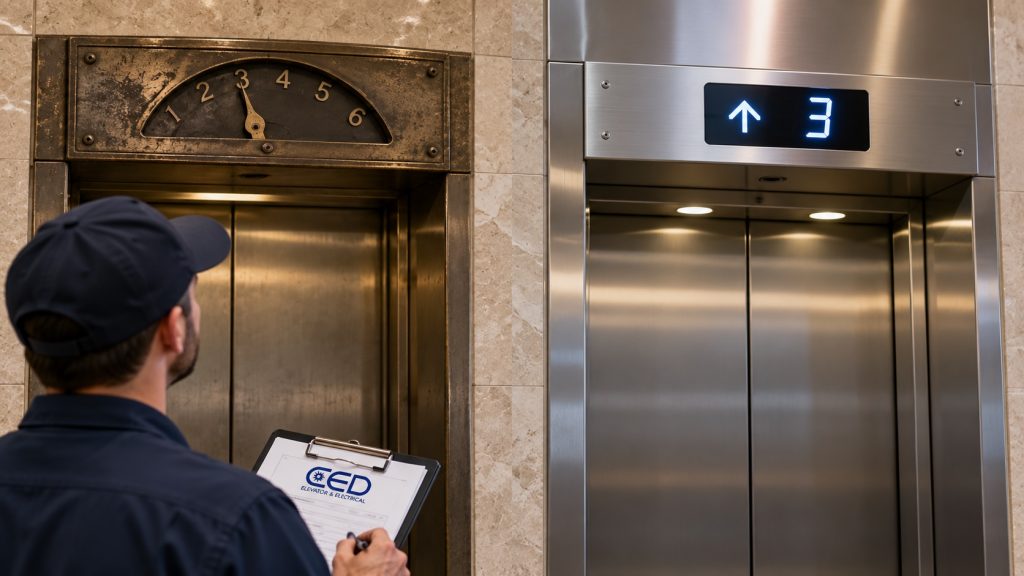
An elevator position indicator displays the elevator car’s current floor and may also show travel direction. LED indicators offer bright, straightforward floor identification, while LCD displays support more detailed graphics, messages, and customized layouts. Legacy systems may use mechanical indicators, incandescent lamps, or older electronic displays. The best replacement depends on controller compatibility, accessibility requirements, installation conditions, and modernization goals.
What Is an Elevator Position Indicator?
An elevator position indicator helps passengers identify their location as the elevator travels between floors.
These displays typically appear above the elevator doors, within the car operating panel, or at selected hall stations.
At CED Elevator & Electrical, we help elevator contractors source compatible control equipment, fixtures, and modernization components.
Choosing the correct elevator floor indicator involves more than appearance. The display must communicate reliably with the existing elevator system and provide clear information to passengers.
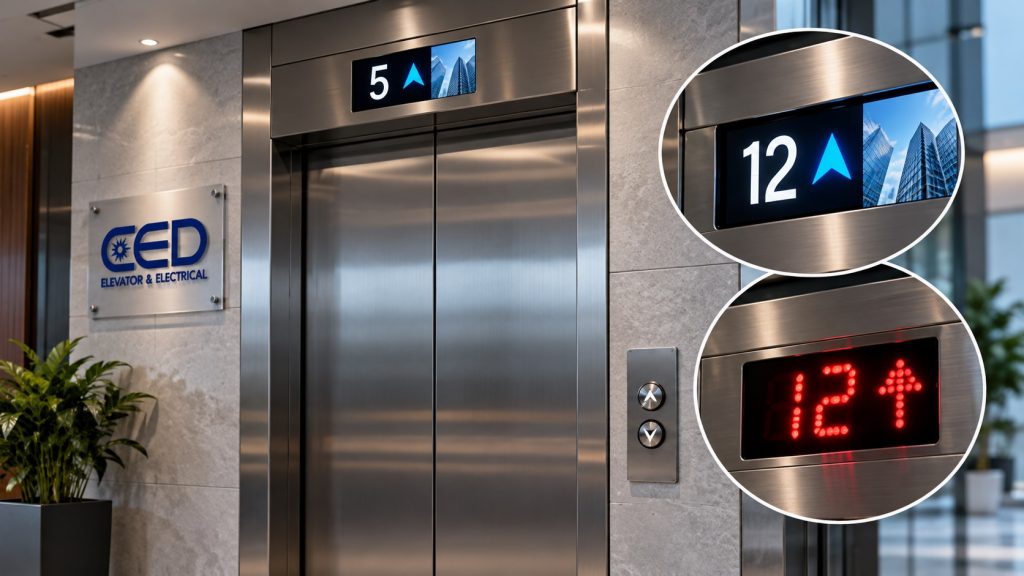
LCD vs. LED vs. Legacy Elevator Displays
Different elevator display technologies offer distinct advantages.
| Feature | LED Indicators | LCD Displays | Legacy Displays |
|---|---|---|---|
| Display style | Segmented or dot-matrix characters | Digital graphics and text | Mechanical, lamp-based, or older electronic |
| Floor identification | Clear numeric display | Numbers, symbols, and graphics | Depends on original design |
| Customization | Usually limited to characters and symbols | Greater layout and graphic flexibility | Often limited |
| Maintenance | Module or driver replacement | Screen, backlight, or controller interface | Replacement parts may be scarce |
| Best application | Straightforward upgrades | Modernization requiring advanced displays | Maintaining existing systems |
1. LED Elevator Position Indicators
LED indicators use light-emitting diodes to display floor numbers, letters, and directional arrows.
Common formats include seven-segment numeric displays and LED dot-matrix panels.
Advantages of LED elevator indicators:
- Clear, bright floor identification
- Relatively straightforward display functions
- Compact installation options
- Low power consumption
- Suitable for many retrofit applications
LED elevator digital displays work especially well when the main requirement is showing the current floor and travel direction.
However, contractors must confirm voltage, communication signals, mounting dimensions, and controller compatibility.
2. LCD Elevator Digital Displays
LCD indicators use liquid crystal display technology to present floor information, directional symbols, and additional messages.
Many modern color displays use TFT LCD technology, which supports more sophisticated graphics and layouts.
Advantages of LCD elevator indicators:
- Customizable floor graphics
- Multiple text and information fields
- Modern cab aesthetics
- Flexible layouts and branding options
- Support for additional messages when the system permits
LCD displays may be suitable for hotels, commercial offices, hospitals, and high-end residential buildings.
They generally require more attention to screen configuration, interface hardware, viewing conditions, and long-term replacement availability.
3. Legacy Elevator Floor Indicators
Older elevators may use mechanical position indicators, illuminated floor numbers, incandescent lamps, or early-generation electronic modules.
Some legacy systems already use LED technology. The term “legacy” describes the age and supportability of the system rather than a single display technology.
Common concerns include:
- Failed lamps or display segments
- Unavailable replacement boards
- Worn connections
- Proprietary communication protocols
- Outdated mounting configurations
Replacing an older elevator floor indicator does not always require replacing the entire controller.
With compatible interface equipment, certain older systems can support modern display modules.
How Elevator Controller Compatibility Affects Display Upgrades
A new display must receive accurate floor-position information from the elevator controller.
This can become challenging when older controllers communicate differently from modern digital indicators.
Common interface considerations include:
Discrete Signals: Separate control inputs identify individual floors or display functions.
Serial Communication: Digital information travels through a compatible communication protocol.
Interface Conversion Boards: Specialized hardware translates signals between older controllers and newer displays.
CED’s fixture catalog includes DL-20 LCD position indicator options, EX-31 and EX-51 display configurations, and multiple controller interface arrangements.
Before ordering, we recommend confirming the controller manufacturer, communication requirements, available power, floor designations, and fixture dimensions.
Our elevator modernization products help contractors coordinate compatible fixtures, controllers, cab equipment, and related electrical materials.
ADA Requirements for Elevator Position Indicators
Elevator digital displays must do more than look attractive.
The U.S. Access Board’s elevator accessibility guidance explains the requirements for accessible car position indicators.
Under ADA Standards Section 407.4.8, relevant requirements include:
- Visible floor characters at least 1/2 inch high
- Indicators above the car control panel or elevator door
- Floor identification as the car passes or stops at served floors
- Appropriate audible floor announcements or permitted signals
Certain exceptions apply, including those involving destination-oriented elevators and qualifying lower-speed systems.
Importantly, replacing a display alone does not automatically establish ADA compliance.
We recommend reviewing the complete indicator and signaling arrangement against applicable accessibility standards and locally adopted elevator codes.
When Should an Elevator Position Indicator Be Replaced?
Not every malfunction requires an immediate modernization project.
However, replacement may be appropriate when the display experiences recurring problems.
Common warning signs include:
- Missing or flickering floor numbers
- Incorrect floor-position information
- Dim or unreadable characters
- Intermittent communication failures
- Obsolete boards with limited parts availability
Before choosing a replacement, qualified technicians should determine whether the problem originates in the display, wiring, power supply, interface board, or controller.
For broader equipment planning, our related guide on elevator controller modernization and non-proprietary systems explains how controls and fixtures can be coordinated during upgrades.
Frequently Asked Questions
What is the difference between an LED and LCD elevator indicator?
LED indicators typically use illuminated segments or dot-matrix elements to display floor information. LCD systems support more flexible graphics, text, and layouts.
Can an old elevator position indicator be replaced without replacing the controller?
Often, yes. A compatible replacement display or interface conversion board may allow the existing controller to remain in service.
Are digital elevator floor indicators required by ADA?
ADA standards require audible and visible car position indicators for covered elevators, but do not mandate LCD or LED technology specifically.
Which elevator display lasts longer?
Service life depends on product quality, operating conditions, electronics, and maintenance. Neither LED nor LCD technology guarantees a specific lifespan.
Source Elevator Position Indicators and Modernization Parts From CED
The right elevator position indicator improves passenger communication and helps support reliable elevator operation.
At CED Elevator & Electrical, we supply elevator contractors with products for repairs, modernization, and new construction.
Whether you’re replacing an outdated floor display or coordinating a complete elevator modernization package, our team can help identify compatible components and sourcing options.
Need elevator position indicators or replacement display components? Contact CED Elevator & Electrical at 866-CED-ELEV to discuss your project specifications and available products.