
Elevator motor overheating can result from excessive load, poor ventilation, repeated starts, voltage or phase problems, bearing wear, brake drag, mechanical resistance, or deterioration inside the motor. Start by reviewing fault history, operating conditions, machine-room temperature, ventilation, abnormal noise, vibration, and signs of mechanical drag. Electrical measurements and internal motor inspection should be handled by qualified elevator or electrical personnel under proper lockout/tagout procedures. Motor manufacturers also identify overload, phase loss, inadequate ventilation, excessive starts, and winding faults as recognized causes of excessive motor temperature.
At CED Elevator & Electrical, we treat excess motor heat as a symptom rather than a diagnosis. Finding the source early can help prevent damaged bearings, winding insulation failure, nuisance shutdowns, and a much more expensive traction machine repair.
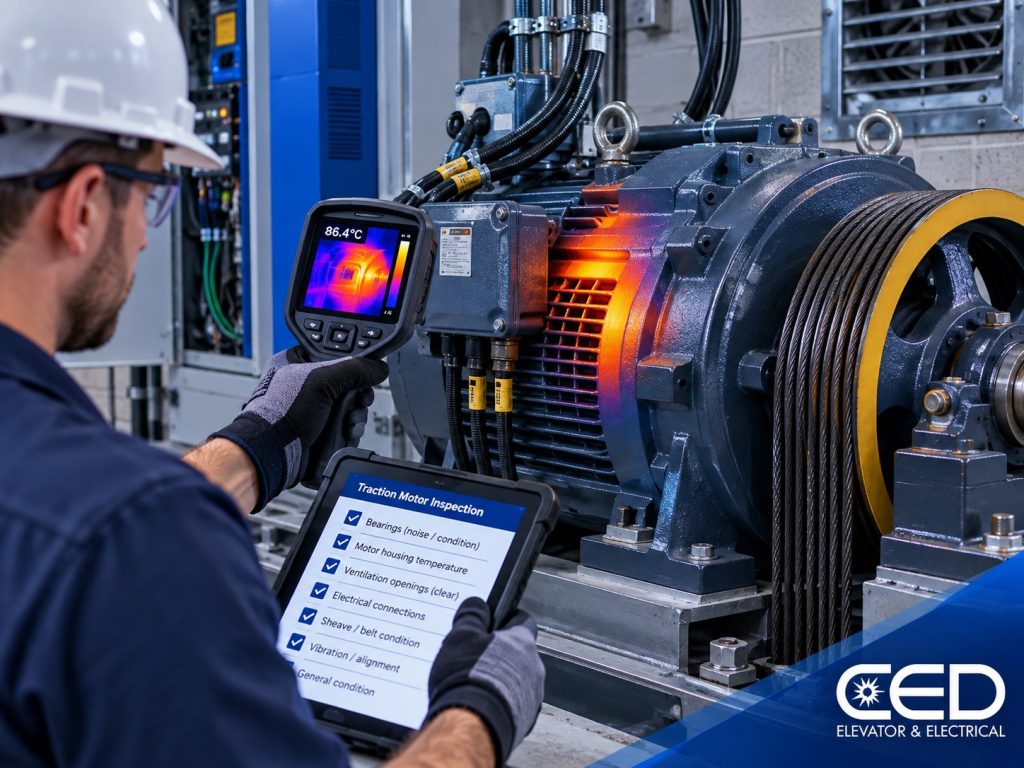
How Hot Is Too Hot for an Elevator Motor?
An elevator motor will naturally produce heat while running. The concern starts when the temperature rises beyond the motor’s normal operating pattern or rated limits.
A motor that suddenly runs hotter than it did under the same traffic conditions deserves attention.
We recommend comparing current operating temperature against:
- Previous readings
- Motor nameplate ratings
- Manufacturer specifications
- Machine-room temperature
- Elevator traffic and duty cycle
- Current draw under comparable loads
Temperature trends are usually more useful than a single reading.
Fluke notes that excess motor temperature accelerates winding-insulation deterioration and that thermal patterns can help distinguish heat originating from windings, bearings, connections, or couplings.
1. Check the Elevator’s Actual Load and Duty Cycle
Overload is one of the first conditions we look at when diagnosing elevator motor heat.
A motor may be correctly sized for normal operation but still experience excess heat when traffic patterns change. Repeated starts during peak periods, unusually heavy car loading, or long operating cycles can increase thermal stress.
Siemens motor troubleshooting guidance lists both overload and excessive starts per hour among possible causes of motor overheating.
Questions worth asking include:
- Has building traffic recently increased?
- Does the motor become hot only during peak use?
- Are starts per hour unusually high?
- Does the car feel sluggish under load?
- Has motor current increased compared with previous service records?
If overheating follows heavy traffic rather than appearing continuously, duty cycle deserves close review.
2. Look for Restricted Cooling or a Hot Machine Room
Motors need to release the heat they generate.
Dust buildup, blocked ventilation passages, failed cooling fans, poor machine-room airflow, or high ambient temperature can prevent that heat from escaping.
This can create a motor that is electrically healthy but still runs excessively hot.
Check for obvious airflow restrictions around the machine while keeping proper clearance around rotating and energized equipment. Do not remove guards or enter hazardous areas without following the required safety procedures.
Siemens specifically lists insufficient ventilation and elevated cooling-air temperature among possible causes of overheated motors.
3. Listen for Bearing Problems
Bearings create another major source of traction motor problems.
A bearing that is worn, contaminated, over-lubricated, under-lubricated, misaligned, or damaged can generate additional friction. That resistance forces the motor to work harder and may create a concentrated hot spot around the bearing housing.
Warning signs can include:
- New humming or grinding sounds
- Increasing vibration
- Heat concentrated around a bearing
- Changes in machine noise
- Rough acceleration
- Unusual mechanical resistance
Siemens documentation lists lubrication problems, contamination, alignment forces, and bearing-current damage among conditions associated with excessive bearing temperature.
4. Check for Brake Drag and Mechanical Resistance
On a traction elevator, motor heat may originate from something the motor is being forced to overcome.
A dragging brake, poor alignment, gearbox problem on geared equipment, sheave resistance, or other mechanical binding can increase the load even when the elevator car is not overloaded.
We look at the entire drive system rather than assuming the motor is automatically defective.
If elevated motor current appears alongside unusual brake noise, slow starts, vibration, or excessive mechanical heat, the underlying load should be evaluated before replacing the motor.
5. Review Voltage, Phase, and Current Conditions
Electrical imbalance can create heat very quickly.
Potential problems include:
- Phase loss
- Voltage imbalance
- Loose or high-resistance connections
- Incorrect motor connections
- Excess current
- Winding faults
- Drive-related faults
Fluke notes that a single-phase condition can create excessive voltage imbalance, high current, and motor heating. Thermal inspection can also reveal abnormal heat at high-resistance electrical connections.
These checks require proper test equipment and qualified personnel. We do not recommend opening energized motor terminals, controllers, or drive equipment simply because the motor feels hot.
6. Review Controller and Drive Fault History
Modern elevator controls often provide valuable clues before physical damage becomes obvious.
Look for recurring events involving:
- Motor overload
- Overcurrent
- Phase loss
- Drive temperature
- Encoder faults
- Excessive start time
- Brake faults
- Undervoltage or overvoltage
A fault code should not automatically lead to replacing the component named by the controller. It provides a starting point for diagnosis.
CED covers this process further in our guide to interpreting elevator controller faults.
7. Compare Motor Heat With the Rest of the Machine
Location matters.
A uniformly hot motor suggests a different problem from one hot bearing, terminal connection, brake assembly, or coupling.
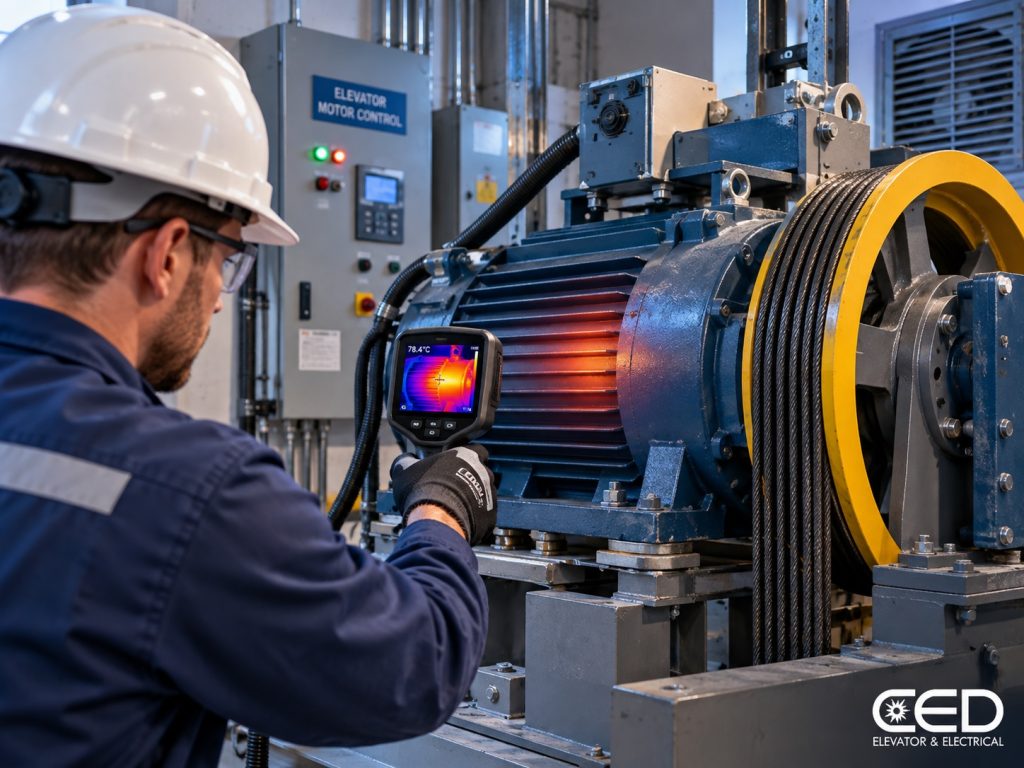
Thermal imaging can help trained technicians establish where heat originates and compare the motor against previous inspection data. Fluke recommends trending thermal images because a baseline makes abnormal hot spots easier to identify.
When Overheating Points Toward Modernization
Not every hot motor needs replacement.
A repair may solve the problem when the cause is a bearing, ventilation issue, connection, brake adjustment, or another correctable condition.
Modernization becomes more relevant when overheating occurs alongside obsolete controls, recurring drive faults, hard-to-source components, excessive energy use, repeated motor failures, or declining system reliability.
CED supplies coordinated materials for both geared and gearless traction elevator modernization projects, including controllers, cable, wire rope, electrical materials, and related components.
Diagnose the Heat Before Replacing the Motor
When elevator motor overheating appears, replacing the motor before finding the cause can lead to the same failure again.
At CED Elevator & Electrical, we recommend looking at operating load, duty cycle, ventilation, bearings, brake behavior, electrical balance, controller faults, and motor condition as one system.
Heat is often the warning.
Finding out what creates that heat is what protects the equipment.