
The best elevator cab finishes depend on traffic, design goals, maintenance expectations, cab weight, and budget. Textured stainless steel is typically the strongest choice for high-traffic commercial elevators because it handles impacts and cleaning well. High-pressure laminate, or HPL, offers excellent design flexibility at a lower weight and cost, with manufacturers documenting resistance to scratches, wear, and impact. Architectural glass creates a premium modern appearance but requires careful weight calculations, safety glazing, edge protection, and frequent cleaning. Wood veneer offers warmth and luxury but generally requires more protection from dents, moisture, and everyday wear. Any elevator interior renovation should also account for the weight removed and added, attachment methods, fire-performance requirements, and the elevator code adopted by the local jurisdiction.
At CED Elevator & Electrical, we recommend selecting elevator interior materials as an engineered system rather than choosing wall panels based only on appearance.
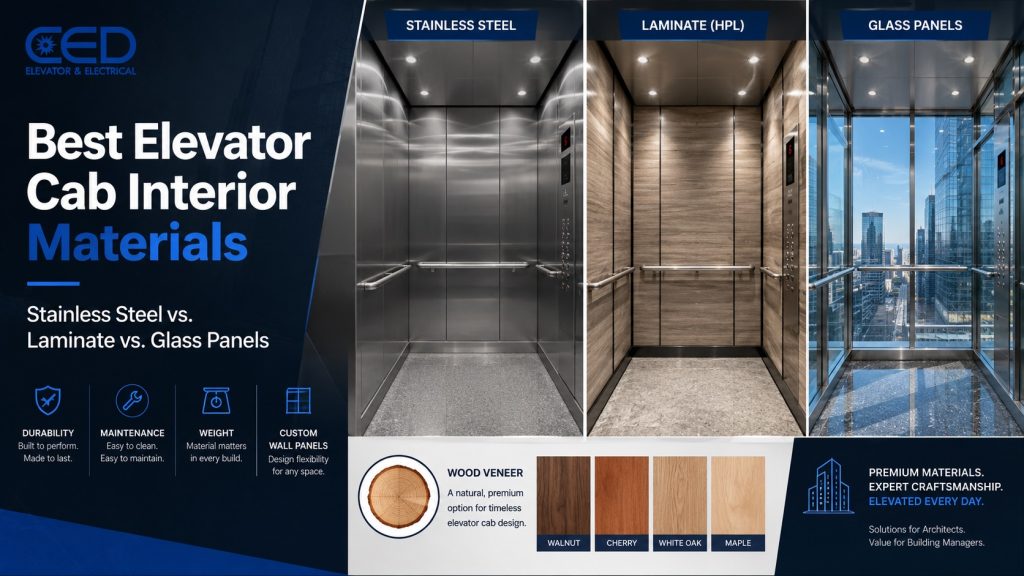
Elevator Cab Finish Comparison
| Material | Durability | Scratch Visibility | Relative Weight | Maintenance | Best Application |
|---|---|---|---|---|---|
| Textured Stainless Steel | Excellent | Low to moderate | Moderate | Low | High-traffic commercial |
| HPL Laminate | Very good | Low to moderate | Low to moderate | Low | Offices, multifamily, hospitality |
| Architectural Glass | Very good | Moderate | High | High | Luxury and modern properties |
| Wood Veneer | Moderate | Moderate to high | Moderate | Moderate | Hotels, executive offices, upscale residential |
These characteristics vary by panel construction, substrate, thickness, finish, and mounting system.
1. Textured Stainless Steel: Best for Heavy Traffic
Stainless steel remains one of the most dependable elevator cab finishes for hospitals, office buildings, transit environments, universities, and busy multifamily properties.
Textured, patterned, or brushed stainless surfaces are especially useful because they can disguise everyday scuffs and fingerprints better than highly polished metal.
Advantages
- Excellent impact resistance
- Long service life
- Easy routine cleaning
- Nonporous surface
- Modern commercial appearance
- Good resistance to moisture
The main drawback is cosmetic scratching. A polished stainless wall can make scratches highly visible, while patterned or embossed surfaces typically camouflage wear more effectively.
For service elevators and other demanding applications, we often favor textured stainless because cosmetic longevity matters just as much as structural durability.
2. High-Pressure Laminate: Best Balance of Design and Cost
High-pressure laminate has become a highly versatile option for custom elevator wall panels.
HPL can reproduce wood grains, stone patterns, solid colors, metallic looks, and contemporary architectural textures without requiring the weight or price associated with some natural materials.
Formica describes HPL as having strong scratch, wear, and impact resistance due to its multilayer construction.
Advantages
- Large selection of colors and patterns
- Good impact and abrasion resistance
- Easy cleaning
- Lower material weight
- Replaceable individual panels
- Cost-effective customization
HPL works particularly well for apartments, offices, hotels, medical buildings, and modernization projects where designers want a custom appearance without creating an excessively heavy interior.
Panel substrate matters. Laminate applied to lightweight engineered backers can produce a significantly different cab-weight result than the same decorative surface installed over a heavy substrate.
3. Architectural Glass: Best for Premium Modern Cabs
Glass elevator interior cladding creates depth, reflectivity, and a premium architectural appearance that works well in luxury residential towers, hotels, corporate buildings, and high-end retail properties.
Options may include back-painted glass, laminated decorative glass, mirrored surfaces, or other safety-glazing assemblies approved for the application.
Advantages
- High-end architectural appearance
- Excellent color consistency
- Resistant to many stains
- Can visually enlarge a small cab
- Custom colors and patterns available
The biggest considerations are weight and maintenance.
Glass panels can add substantial mass compared with lightweight HPL systems. Fingerprints, water spots, and smudges are also more obvious, especially on reflective surfaces.
Edges and mounting systems need careful design because elevator interiors experience vibration, passenger impacts, carts, luggage, and cleaning equipment.
4. Wood Veneer: Best for Warm, Luxury Interiors
Natural wood veneer delivers something laminate cannot completely duplicate: real grain variation and depth.
Wood works exceptionally well in boutique hotels, private clubs, executive buildings, and luxury residential elevators.
However, natural veneer needs more care.
Carts, luggage, cleaning equipment, and passenger contact can dent or scratch the finish. Moisture exposure can also affect improperly protected wood products.
A common solution is combining wood-look or natural-wood accent panels with stainless-steel corner guards, handrails, reveals, and lower protection panels.
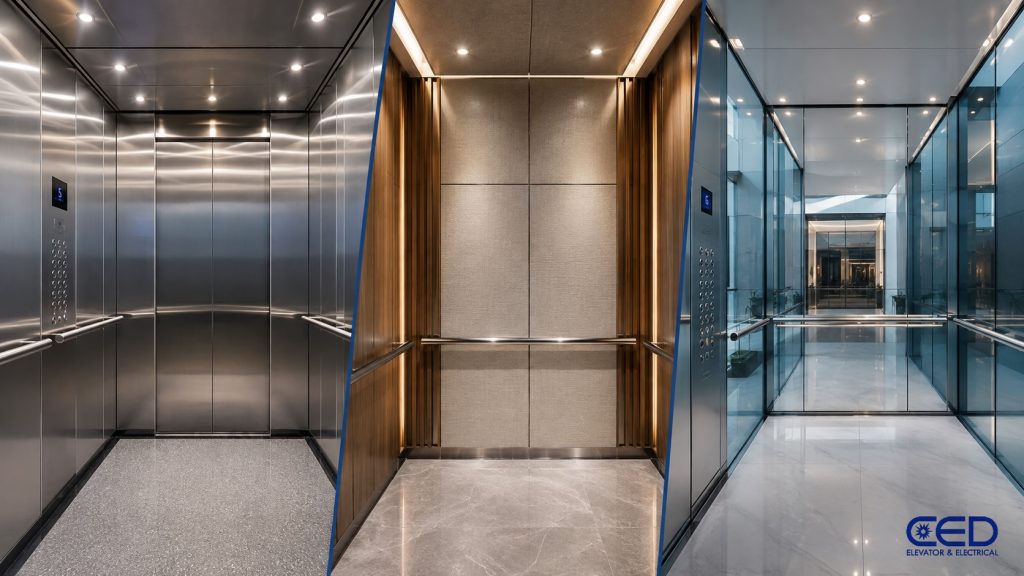
Elevator Cab Weight Cannot Be Ignored
Material selection affects more than aesthetics.
Elevator World identifies weight, code-compliant materials, attachment, durability, appearance, and installation as core considerations when replacing cab finishes. Added weight can influence elevator performance, reliability, and safety.
That makes weight calculations particularly important when replacing lightweight laminate with glass, stone-look assemblies, heavy stainless panels, or thicker decorative systems.
ASME A17.1/CSA B44 addresses elevator design, alteration, repair, inspection, and testing requirements. The edition enforced varies by jurisdiction, so cab modifications should be reviewed by qualified elevator professionals and the authority having jurisdiction.
For reference, see the official ASME A17 Elevator and Escalator Standards.
Which Elevator Interior Material Should You Choose?
We generally recommend matching materials to building use:
High-traffic public building: Textured stainless steel
Office or multifamily property: HPL with stainless accents
Luxury hotel or condominium: Glass, veneer, or mixed materials
Service elevator: Heavy-duty textured stainless
Budget-conscious modernization: HPL modular wall panels
A mixed-material design can often produce the best result. Stainless kick plates and corners can protect high-impact areas while HPL, wood, or glass provides the visual character.
CED supplies materials for complete elevator modernization projects, along with cab-related products, handrails, fixtures, entrances, doors, and custom products. CED’s catalog specifically includes cabs and interiors among its custom product capabilities.
For broader planning considerations, see our related guide, How to Choose the Right Elevator for Your Building.
Custom Elevator Cab Interior Finishes From CED
The right elevator interior has to balance appearance with weight, wear resistance, maintenance, code compliance, and long-term serviceability.
At CED Elevator & Electrical, our team can help elevator contractors, architects, consultants, and building professionals source custom elevator wall panels, elevator interior cladding, stainless finishes, cab components, handrails, fixtures, and modernization materials for new and existing applications.
Planning an elevator cab renovation? Contact CED Elevator & Electrical to discuss custom cab interior finishes, wall panel fabrication, and material options for the project.